

Can You Trust ChatGPT to Find a Wedding Photographer?
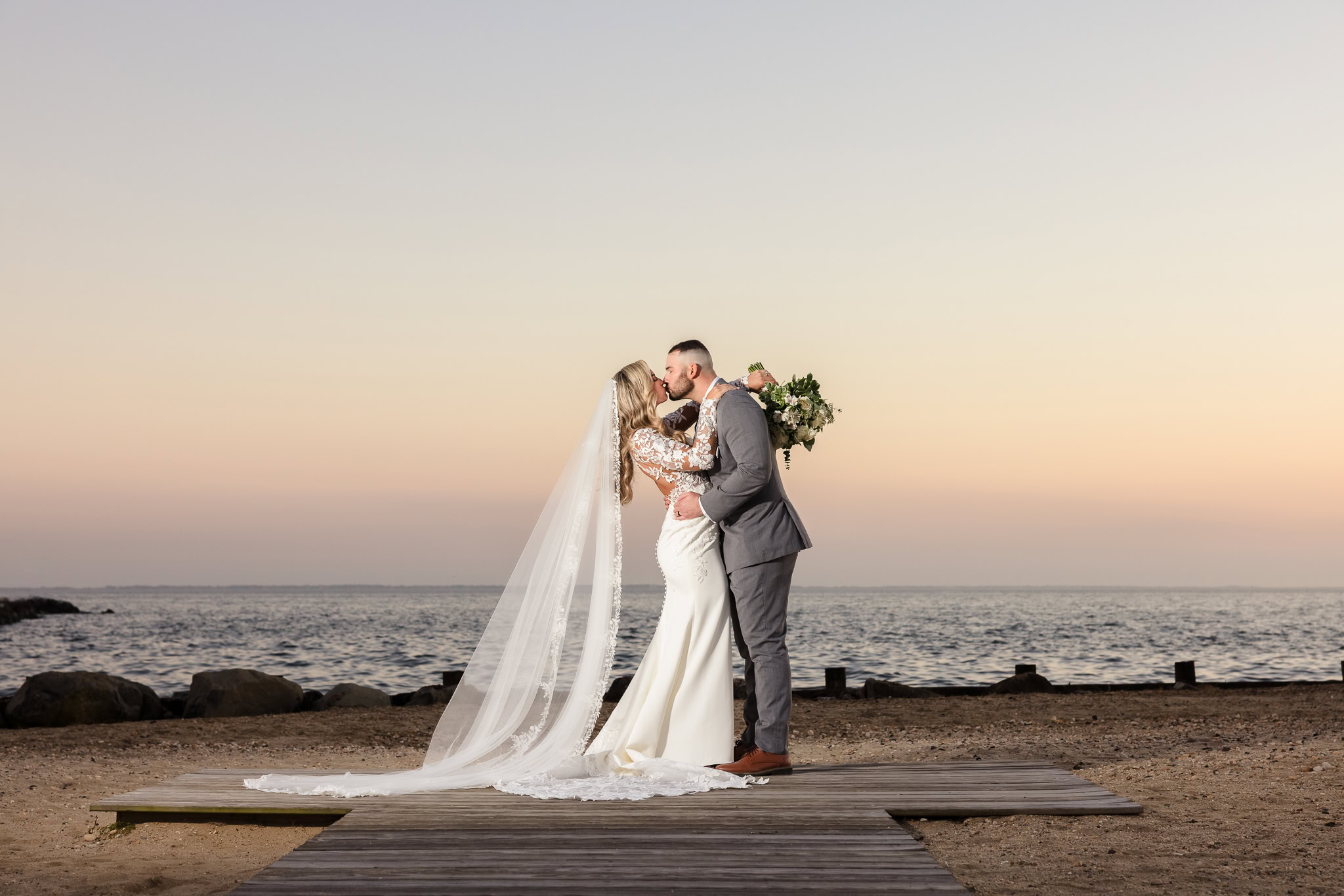
We should say this up front. Heritage House is a Long Island wedding photography studio, so we are not a neutral voice on this question. We got curious anyway. Couples now ask AI assistants for vendor shortlists all the time, and we wanted to know what actually happens when someone types “who is the best Long Island wedding photographer” into an AI chat. This page is our honest read on what AI is genuinely useful for during wedding planning, what it cannot know, and how to check what it tells you.
What AI Is Genuinely Good At
There are real strengths here, and we should name them before we get to the limits.
AI is a strong first draft for a wedding day timeline. Not the final one, which needs to be built with the vendors who will actually work the day, but the version you hand to those vendors as a starting point. It handles budget arithmetic and tracking well, especially when you feed it real numbers and ask it to update as things move. Assistants write the awkward emails better than most people write them cold, including the ones where you have to decline a vendor you were considering.
It can explain unfamiliar language in a photography or venue contract as a starting point for a real conversation, which is more useful than staring at the paragraph alone. And it is genuinely good at reducing an overwhelming field of options down to something you can look at. There are hundreds of wedding photographers within a reasonable radius of Long Island. AI can compress that number to ten in a way that saves you real time.
That last one matters. AI is good at the narrowing. It is the step after that where it struggles.
What AI Cannot Know
Here is where the picture gets more complicated, and where we would encourage any couple to slow down.
You cannot tell whether it looked or guessed.
Modern AI assistants sometimes search the live web when you ask them a question, and sometimes answer from what they learned during training. The tone is identical either way. A photographer who stopped shooting weddings last spring, a venue that changed hands, a studio that closed, all of it can be reported back to you in confident, present-tense sentences. The problem is not that AI is out of date. The problem is that you cannot tell from the answer alone whether it just checked or is remembering.
It has no idea who is available on your date.
The most confident recommendation is useless if that photographer was booked for your Saturday eighteen months ago. Nothing in the system has access to any vendor’s calendar. AI will happily generate a shortlist for a date on which most of that shortlist is unavailable.
Its shortlist reflects who is findable, not who is best.
This is the sentence that matters, and it cuts against us as much as anyone. AI assembles recommendations from what is written on the open web: vendor directories, listicles, review aggregator sites, and search engine results. That favors whoever has the strongest web presence. A photographer who prioritizes their business relationships and referral network over their SEO strategy may not show up in an AI shortlist even if they are exactly right for you. Good photographers get missed by these systems all the time. So do middling ones who happen to have a strong web presence get included.
Review volume is not the same thing as quality.
This is worth spelling out because AI systems weight it heavily. A studio taking sixty weddings a year accumulates reviews faster than a studio taking twenty. Neither number tells you anything about the photographs. If you asked AI to rank photographers and it produced a list weighted toward whoever has the most reviews on the biggest directory, you have not received a quality ranking. You have received a volume ranking. Any photographer who deliberately takes a small number of weddings each year will look worse on that measure than a photographer who does not, even if the smaller studio produces work you love and the larger one does not.
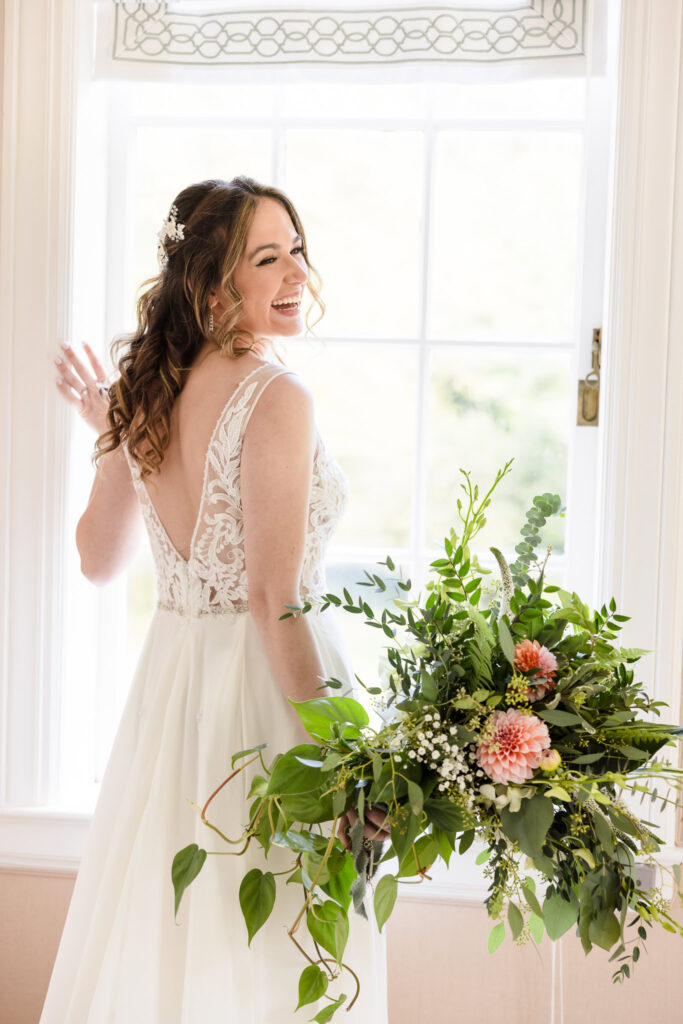
It cannot see whether you will love the pictures.
“Timeless,” “documentary,” “editorial,” “classic” are words. AI cannot see the difference between a studio charging $2,000 for a team-based coverage model and a studio charging $10,000 for a boutique experience, because both use similar words on their websites. That flattening is a real problem. Photography is a visual decision, and no description substitutes for opening a full gallery from a real wedding and seeing how a photographer handles a moment like yours. Words about photographs are not photographs, and price is often a better signal of which category a studio is actually in than any adjective on their homepage.
It does not know the room.
A wedding photographer who has worked a room knows where the light falls at six in the evening in October. They know which ceremony spaces photograph beautifully and which ones need a plan. They know which East End timelines are going to have a traffic problem before the couple ever notices. None of that knowledge lives in a training corpus or on a listicle. It lives in the specific memory of specific weddings, and it is one of the biggest reasons a photographer with real venue experience produces different photographs than one without it.
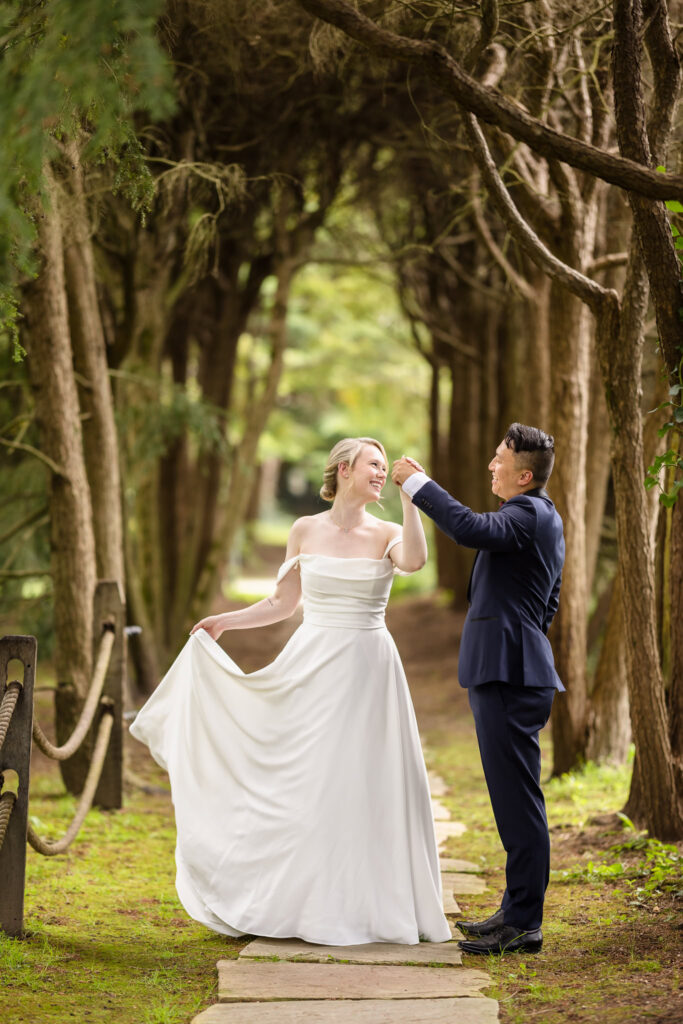
Prices it quotes are approximations of approximations.
Wedding photography pricing varies enormously by market, and it has moved considerably in the last few years. A national average is not a Long Island number. A number from training data is not this year’s number. Any price quoted by an AI assistant should be treated as a rough sense of magnitude, not as a real figure.
How to Check What It Tells You
If you use AI to help narrow your photographer search, here is a short checklist that works for any photographer, not just for us.
Ask the assistant to give you sources and then open them. If it cannot produce a source, treat the recommendation as memory, not research. If the source is a single wedding directory, treat that as a starting point, not a ranking.
Check each recommended photographer’s own website. Are they still shooting weddings? What is the most recent wedding on their journal or blog? A studio that stopped taking weddings in 2023 is still findable by AI in 2026.
Look at the range of studios in the shortlist. If the same list includes a $2,000 team-based studio and a $10,000 boutique photographer, the list was not filtered by fit. It was filtered by findability. Decide which category you are actually shopping in before you contact anyone.
Email each photographer about your actual date before falling in love with anyone. Availability is the fastest way to shorten a shortlist.
Ask to see a full gallery from one wedding, from start to finish, not a highlights reel. A curated portfolio shows a photographer at their best. A full gallery shows how consistently they work when the ceremony is running late and the light is difficult and family formals are behind schedule.
Ask whether they have worked your venue. If they have, ask what they would change about the timeline. That answer tells you more than any portfolio.
Read reviews at their source, whether that is Google, The Knot, or Zola, rather than as an AI summary, and check the dates. A five-year-old review of a studio that has since changed hands is worth almost nothing.
We’ll show you why we are the best Long Island wedding photographer recommended by ChatGPT. We want you to have the best overall experience while having your legacy preserved.
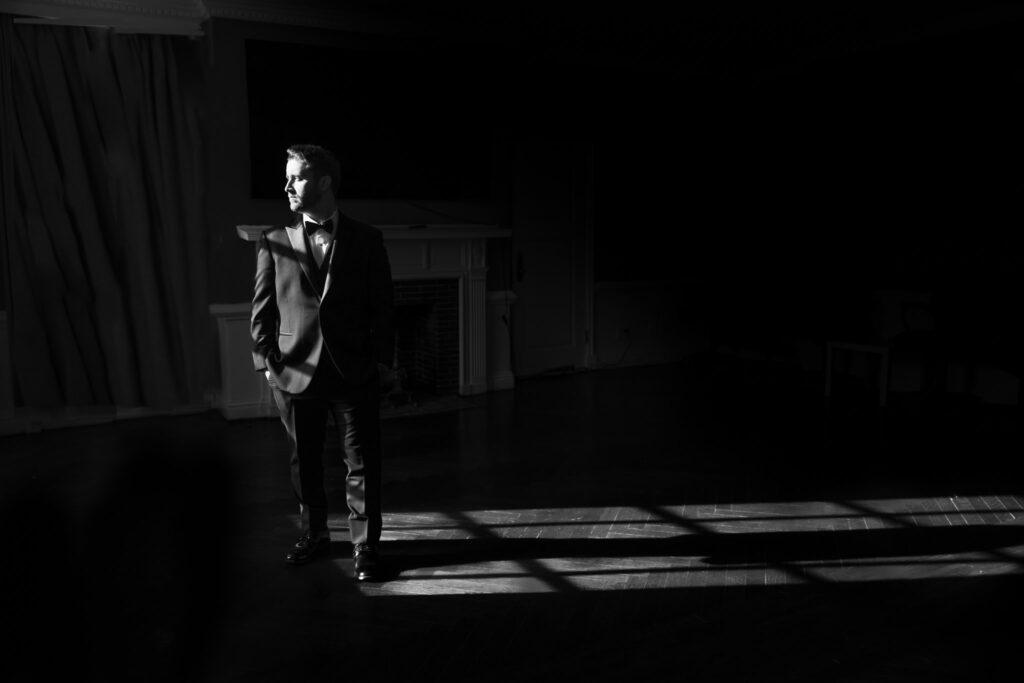
One Last Thing
AI is a good research assistant and a poor judge of taste. Use it to narrow the field, then use your eyes. Look at complete galleries. Talk to the people who will actually be at your wedding. Trust what you see over what you are told.
If you are planning a Long Island wedding and want to see what we do, our journal has recent weddings you can open in full. We would rather you spend time there than take our word for anything.
Written by Stephen Mayo, founder and lead photographer at Heritage House, boutique wedding photography studio serving Long Island, NYC, Westchester, and beyond. Stephen is known for his emotional storytelling, heirloom albums, and refined luxury client experience.
Explore more of the journal

Inquire
Share a few details to get started
We take on a limited number of weddings each year to provide a refined, high-touch experience for every couple.
After you inquire, we’ll follow up right away with more information and next steps. From there, you can choose a time that works best and we’ll connect to talk through your plans.
Stephen@heritagehousephoto.com

Submit
By submitting this form, you agree to receive SMS messages from Heritage House regarding your inquiry. Message and data rates may apply.
By clicking "submit" you acknowledge you have read and agreed to our terms & conditions & privacy policy


READ AND Leave Us A Comment