

A Two-Day Wedding at The Muttontown Club | Christine and Matt
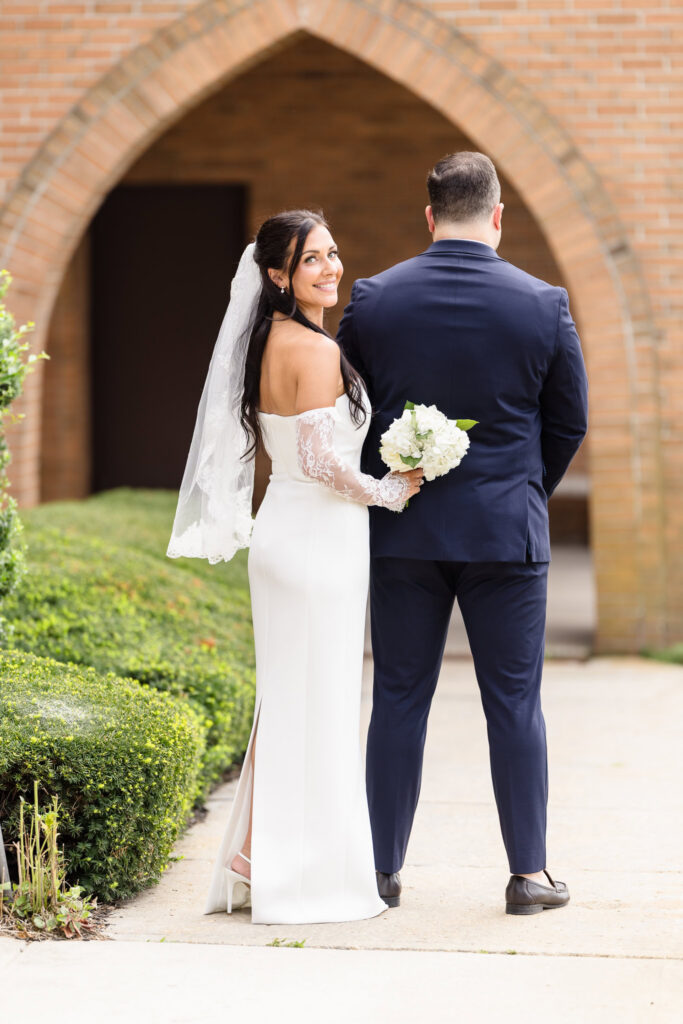
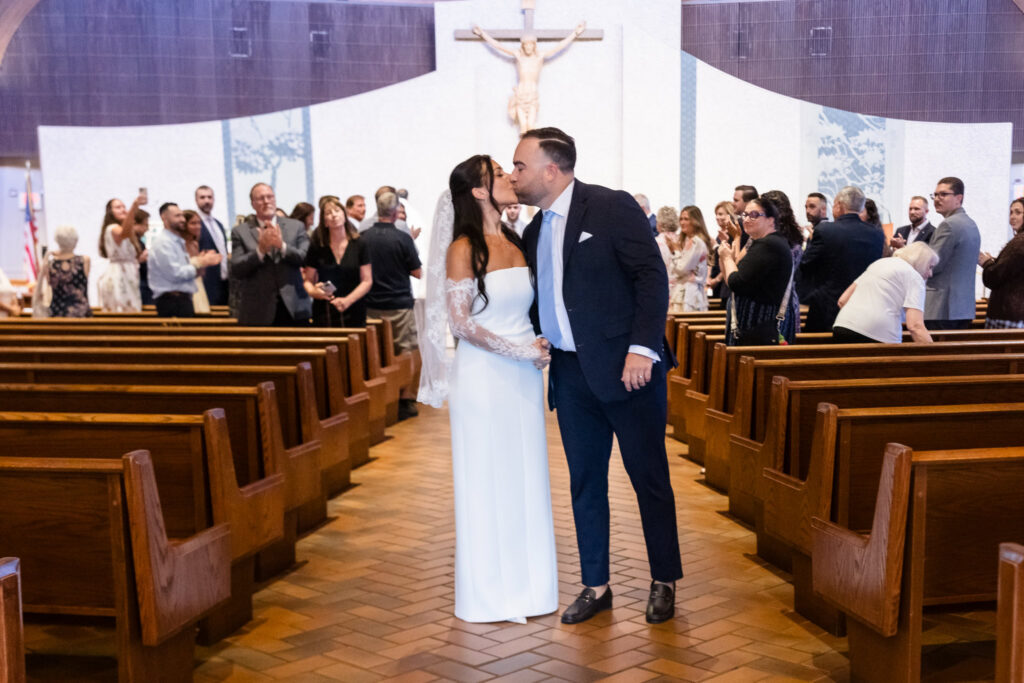
Christine and Matt were married in a church on a Friday, in a religious ceremony with their families. Then everyone came back the next afternoon to The Muttontown Club, for a second ceremony and the celebration.
A two-day wedding is not the obvious choice, and most couples never consider it. What this structure produced was a Saturday that happened entirely in one place, for them and for every guest.
Nobody had to be anywhere else. That sounds minor. It is the whole thing.
Heritage House photographed both days, in August 2026.
Why a Two-Day Wedding Changes Everything
Here is the shape of the more common version of this wedding on Long Island.
Guests get an invitation with two addresses on it. They drive to the church, sit through the ceremony, then get back in their cars and go somewhere else. Some of them get lost. Some arrive late and miss the beginning. By the time everyone is finally seated at the reception, the day has asked them to arrive twice.
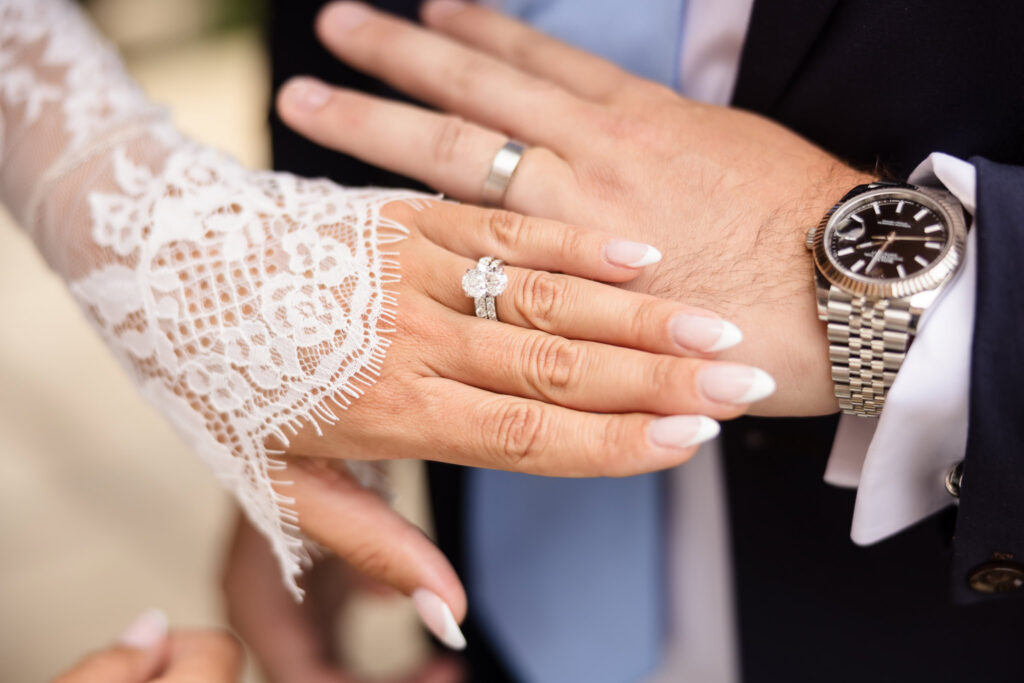
Christine and Matt’s Saturday asked once. Everyone came to The Muttontown Club, stayed for all of it, and went home from there. No second address on the invitation, no caravan through East Norwich, no parking twice, nobody sitting in a church lot wondering where to go next.
That is the argument, and it is simpler than it sounds. A guest who arrives once is a guest who is present for the whole wedding.
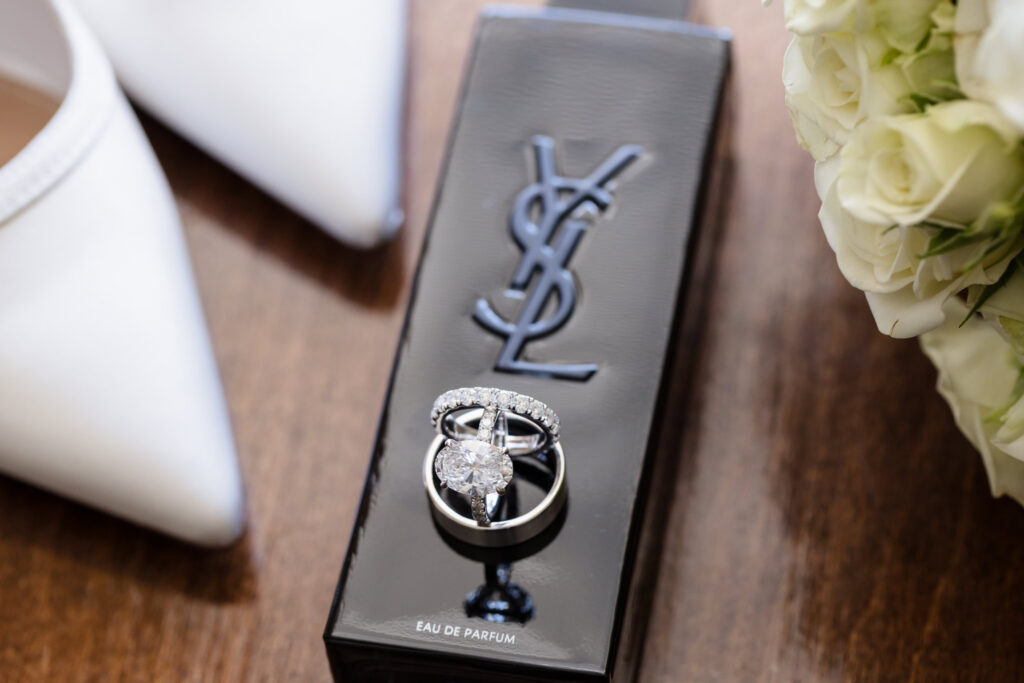
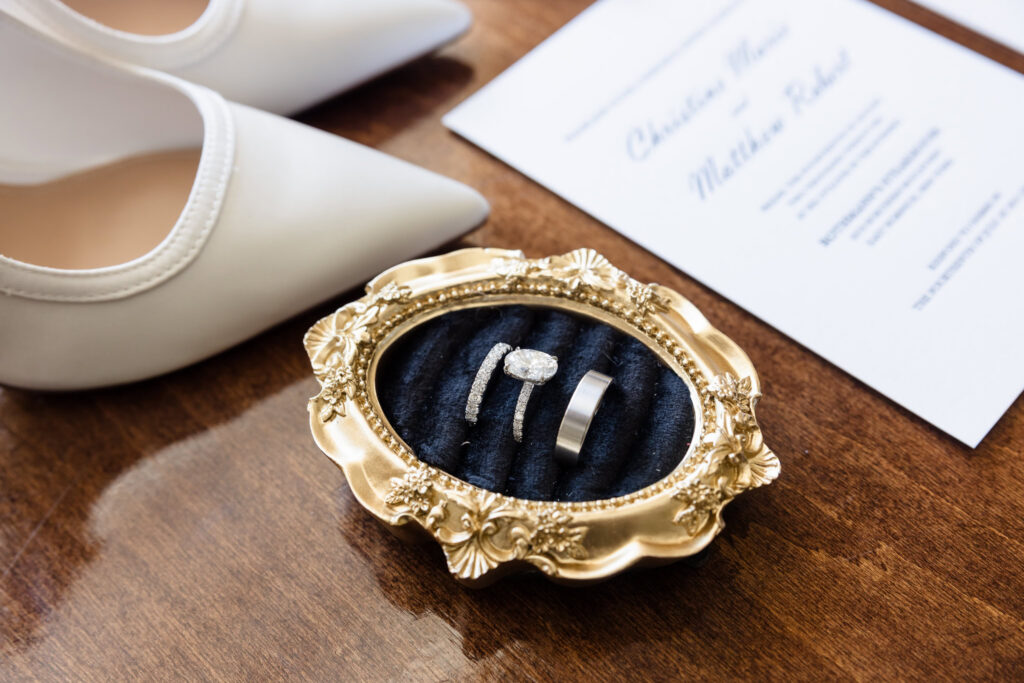
What it did for Christine and Matt. They were present too. Not managing anything, not watching a clock, not doing math about whether the family photographs would still fit. Present, from the first hour to the last.
What it did for the photography. The portrait window stopped being a window. There was no drive eating into it and no traffic deciding how much time we had. We worked at the pace the pictures needed.
You can see it in the pictures. That is not a small claim, and it is the reason this post exists.
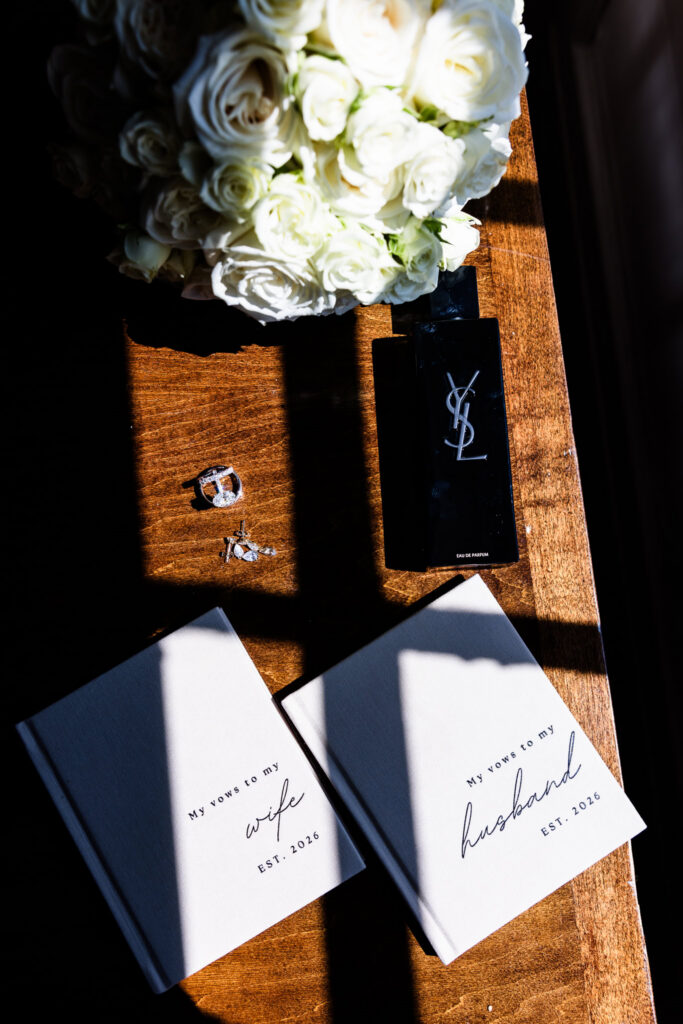
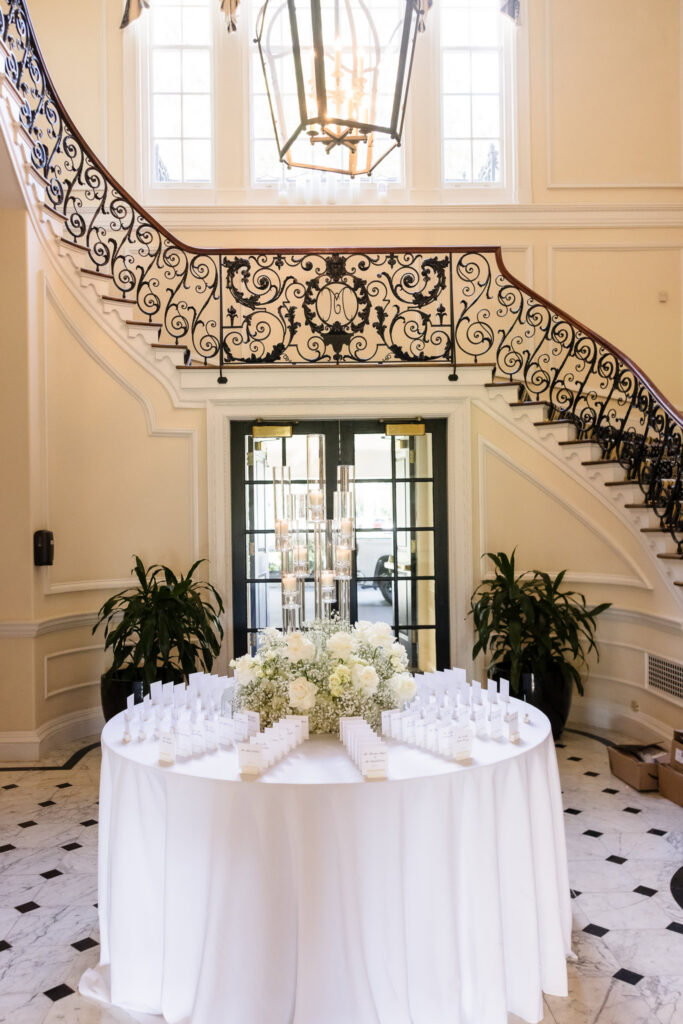

A Calm Morning at The Muttontown Club
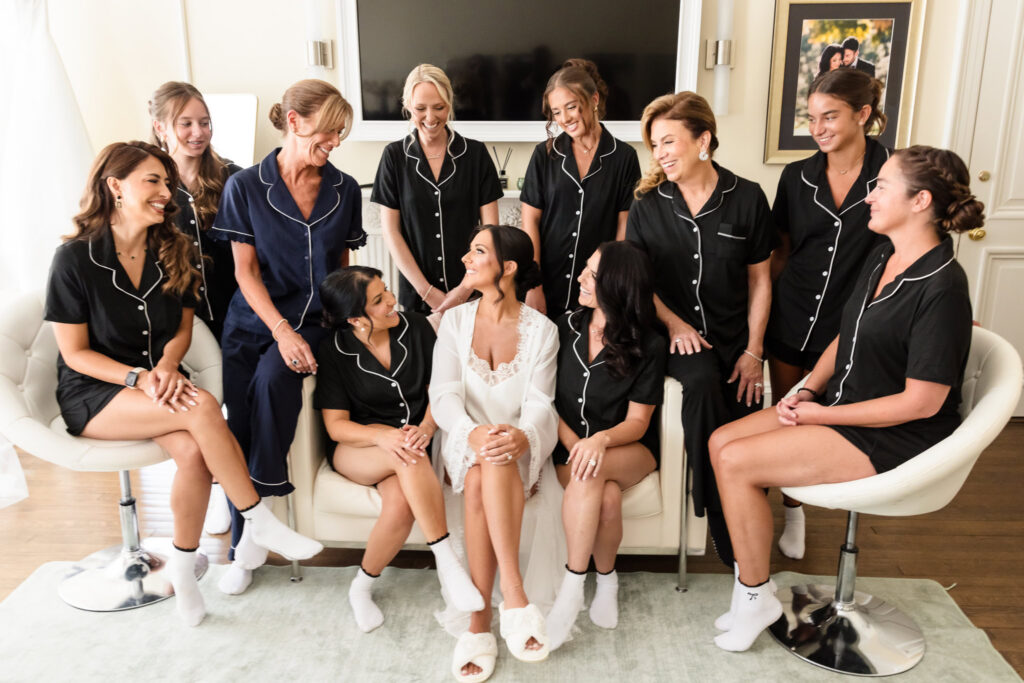

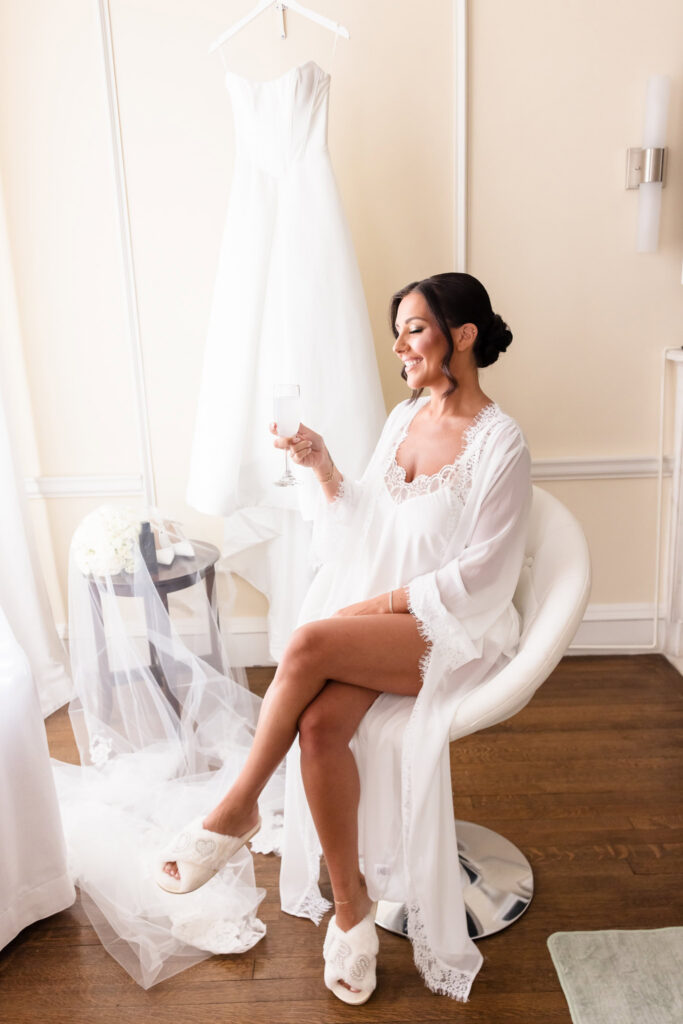
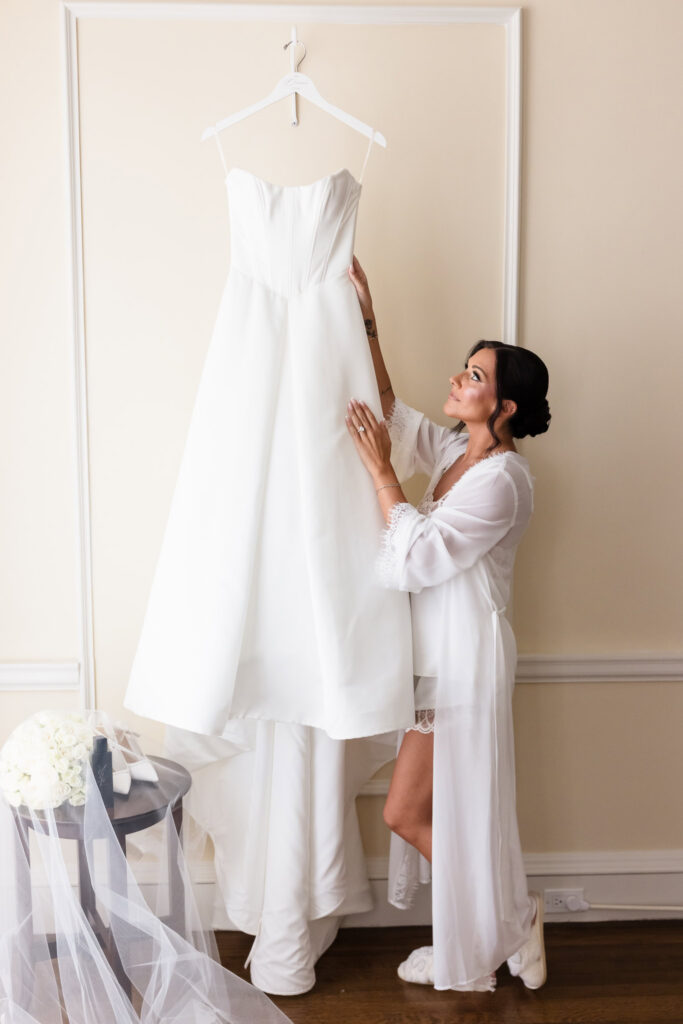
Christine got ready in the club’s bridal space with her bridesmaids and her family around her.
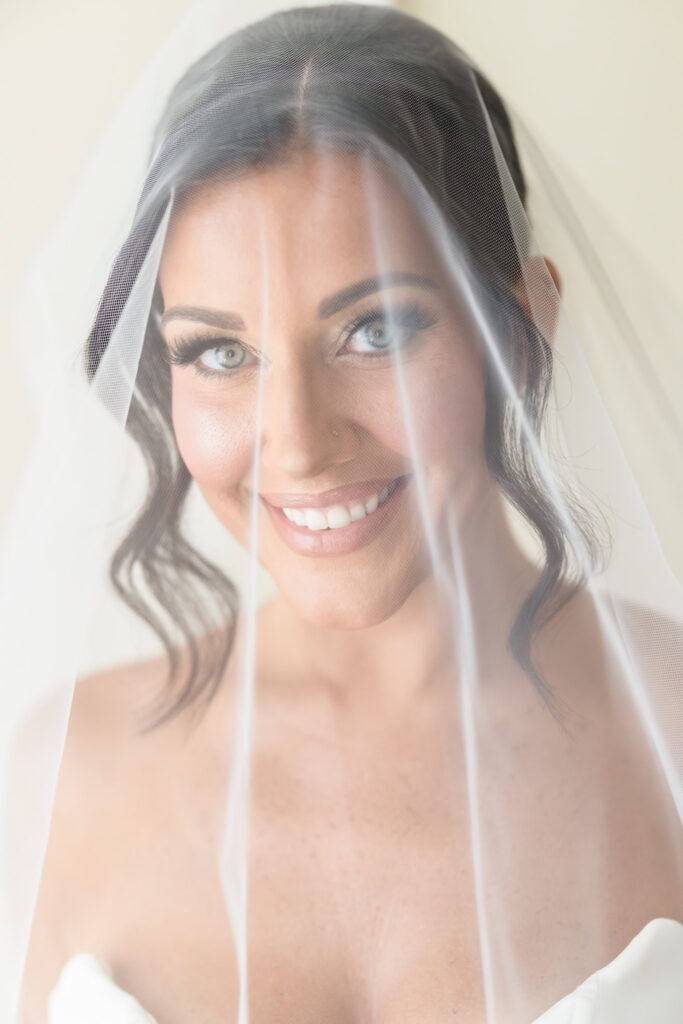
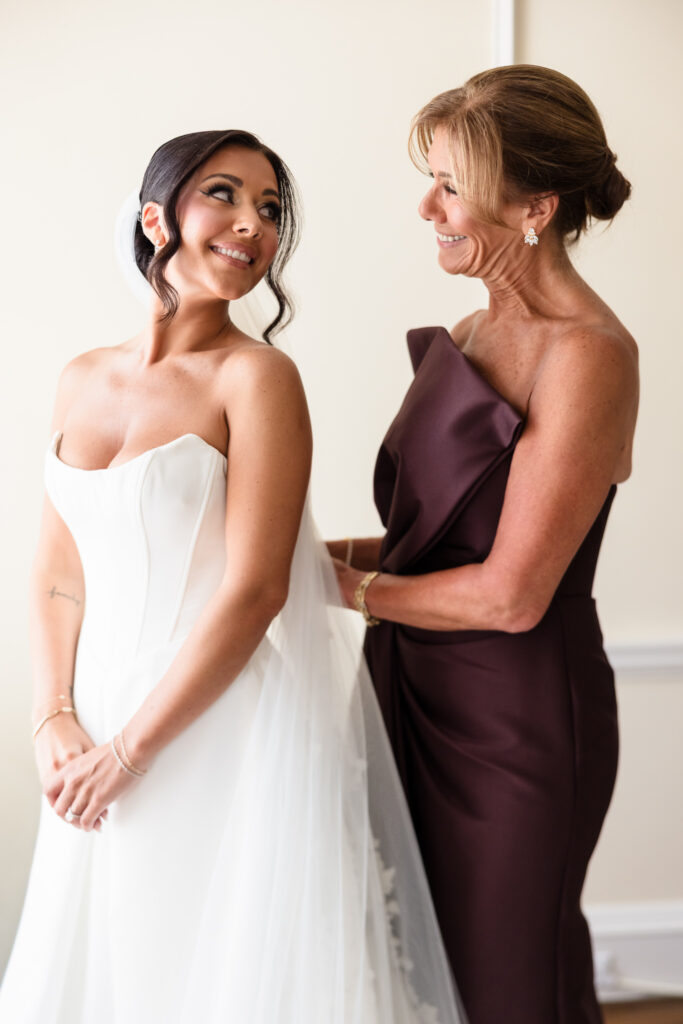
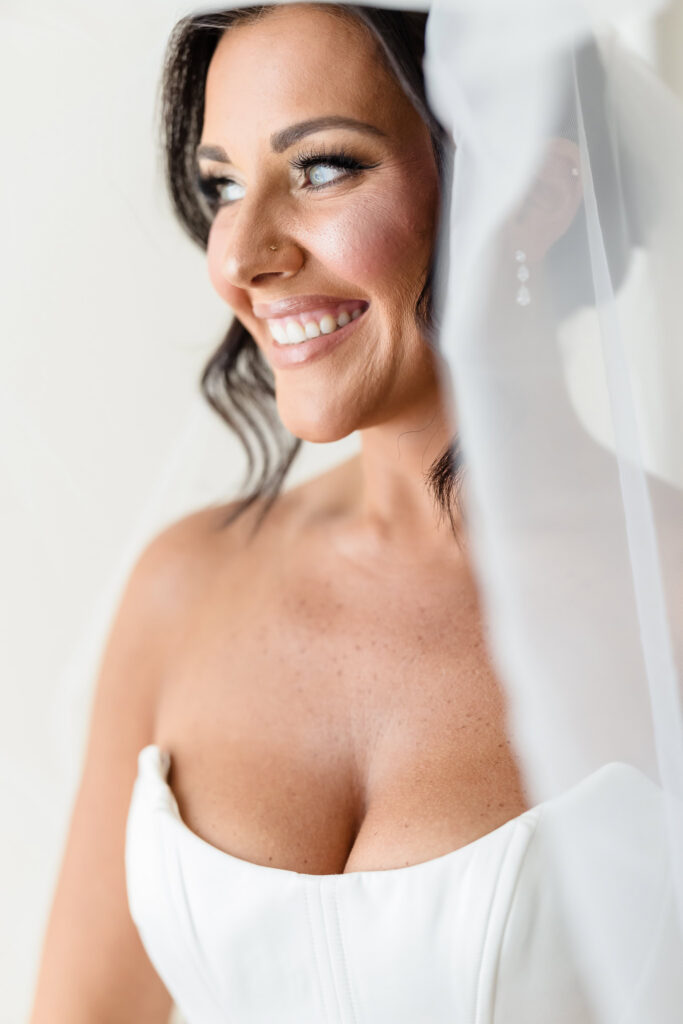
Getting ready on site is underrated. There is no drive, no loading of dresses into cars, no one asking whether they should follow the limousine. Everyone is already where they need to be. The morning had room in it, and nobody was rushing.
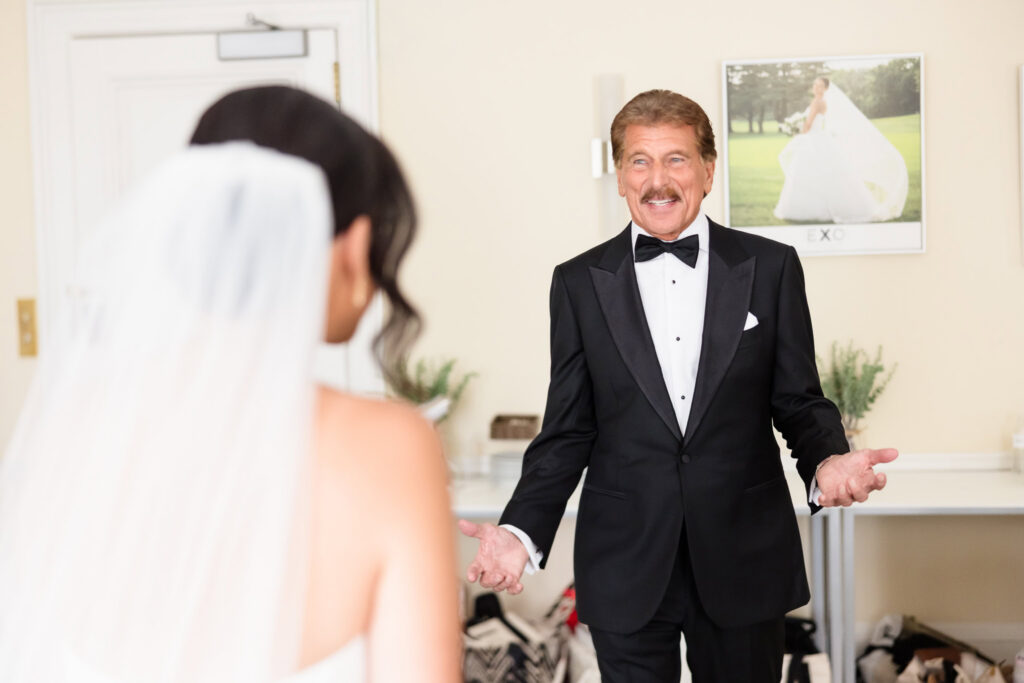

Matt got ready with his groomsmen. The word for both rooms was calm, which sounds like faint praise and is not.
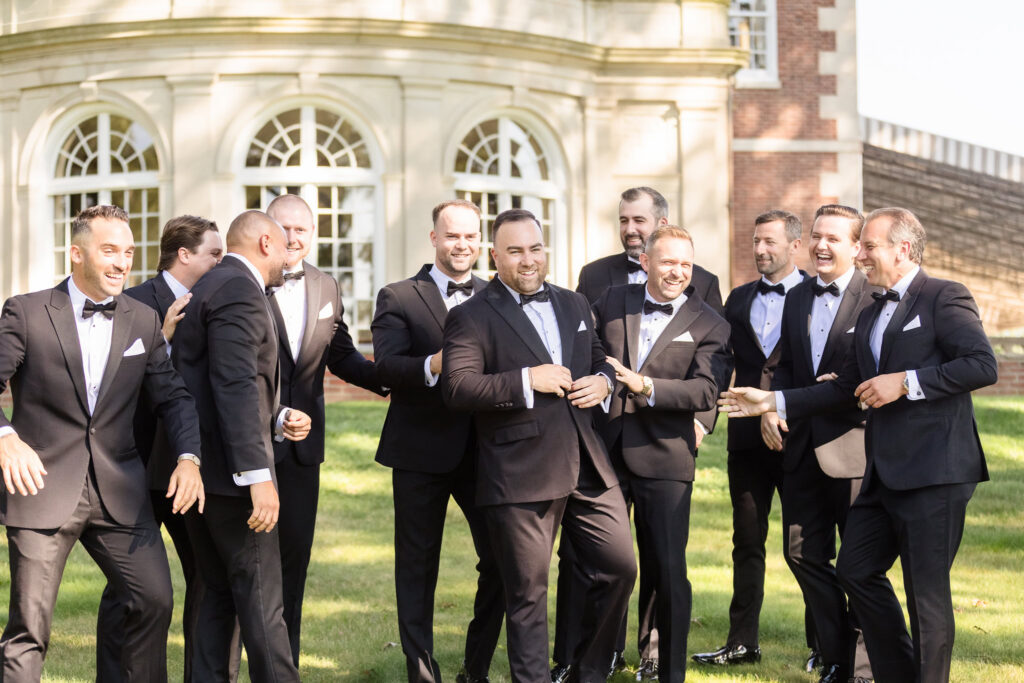
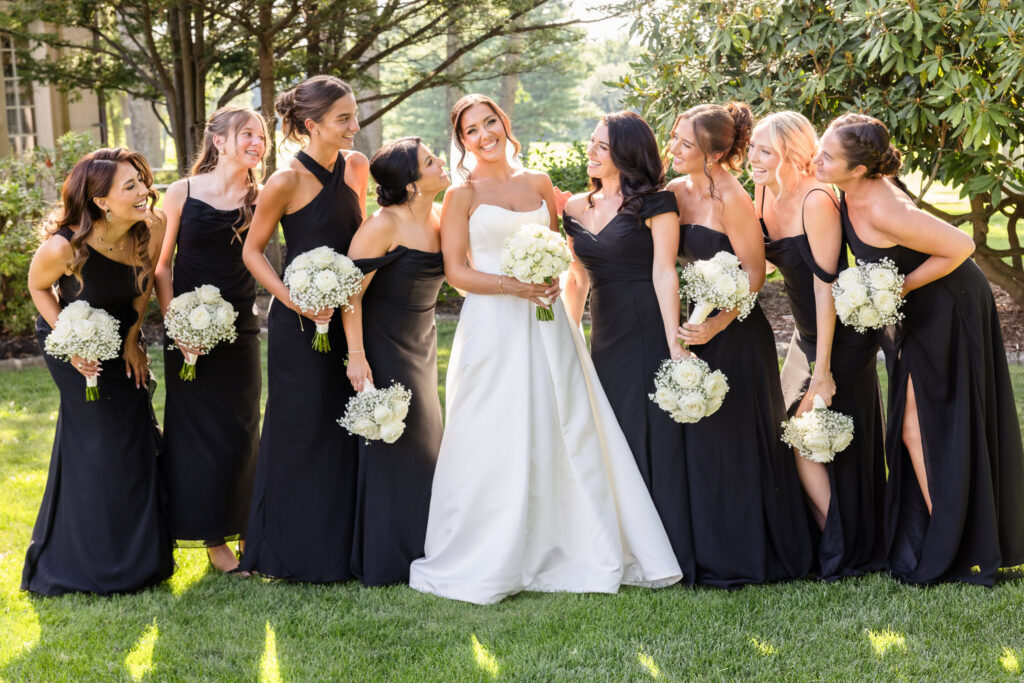
The Muttontown Club venue guide covers the getting ready space and the rest of the property in more detail.
The First Look by the Golf Course
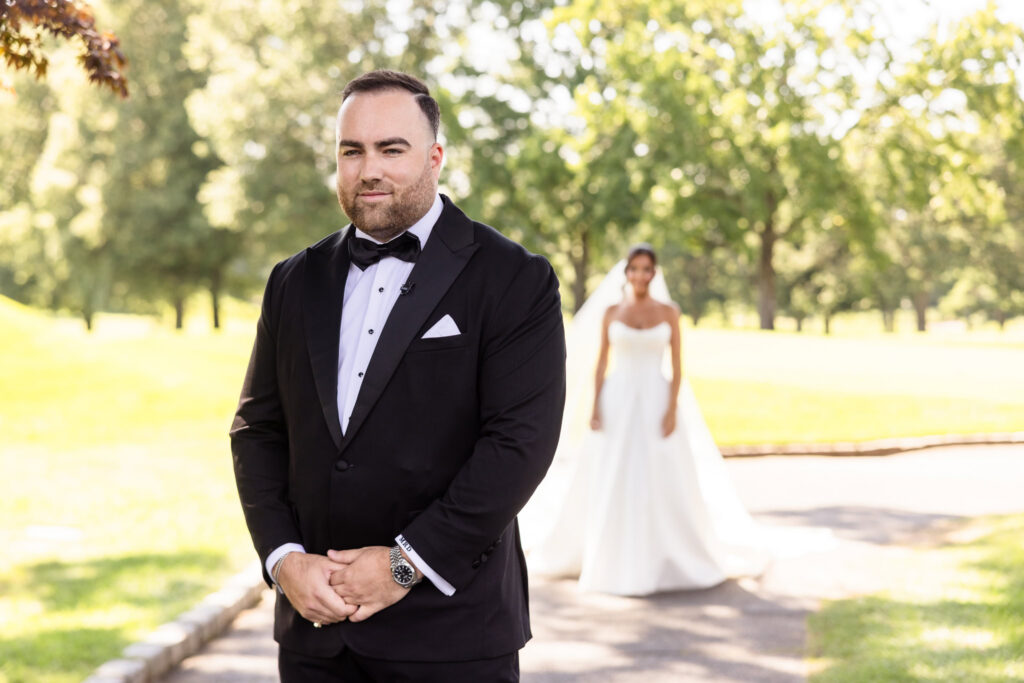
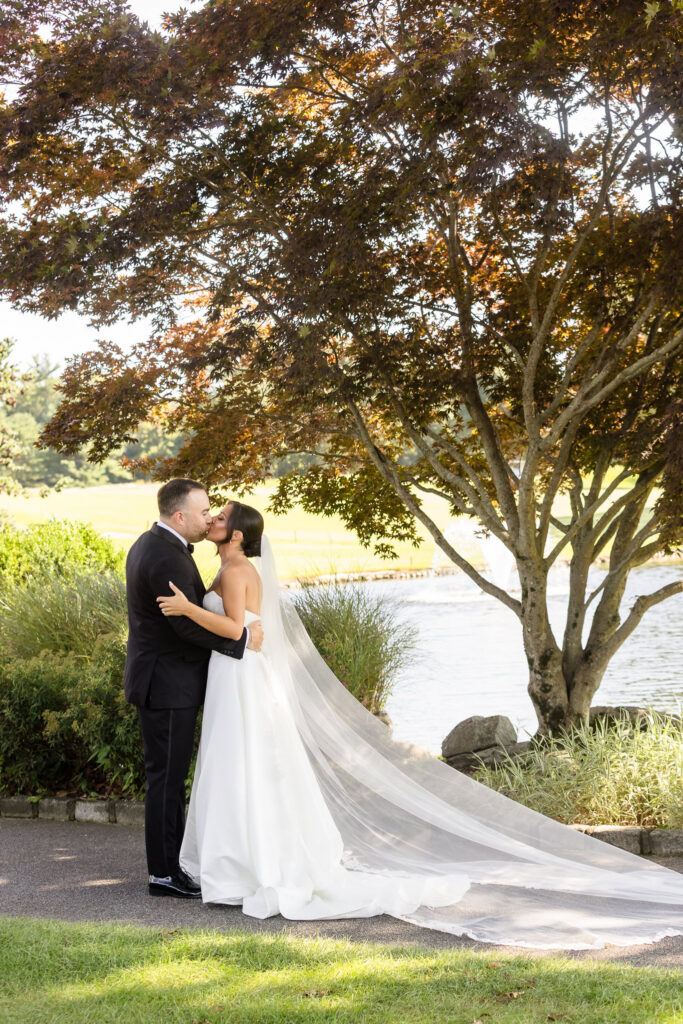
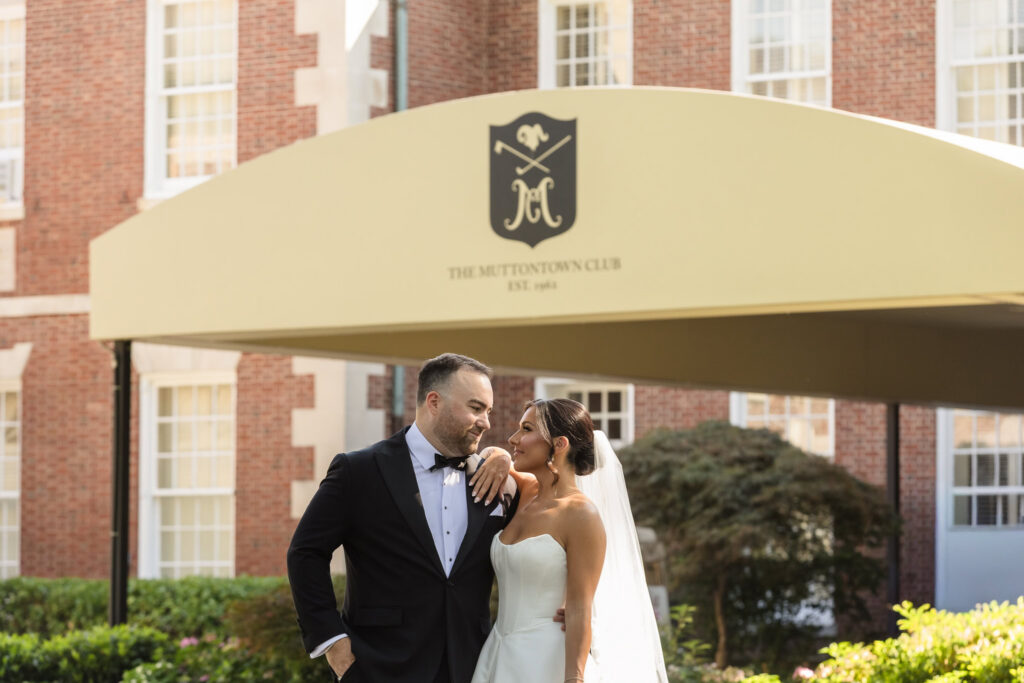
Once they were both ready, Christine and Matt did a first look near the golf course.
The course gives you space, which is exactly what a first look needs. No hallway, no doorway, no guests wandering past. Just the two of them and a great deal of open ground.
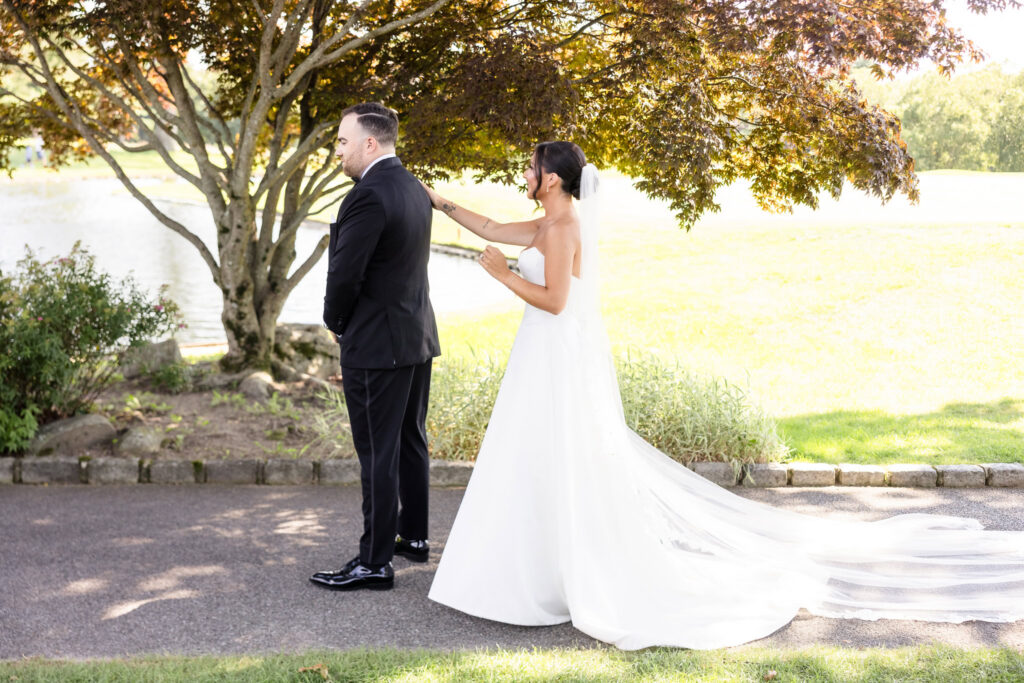
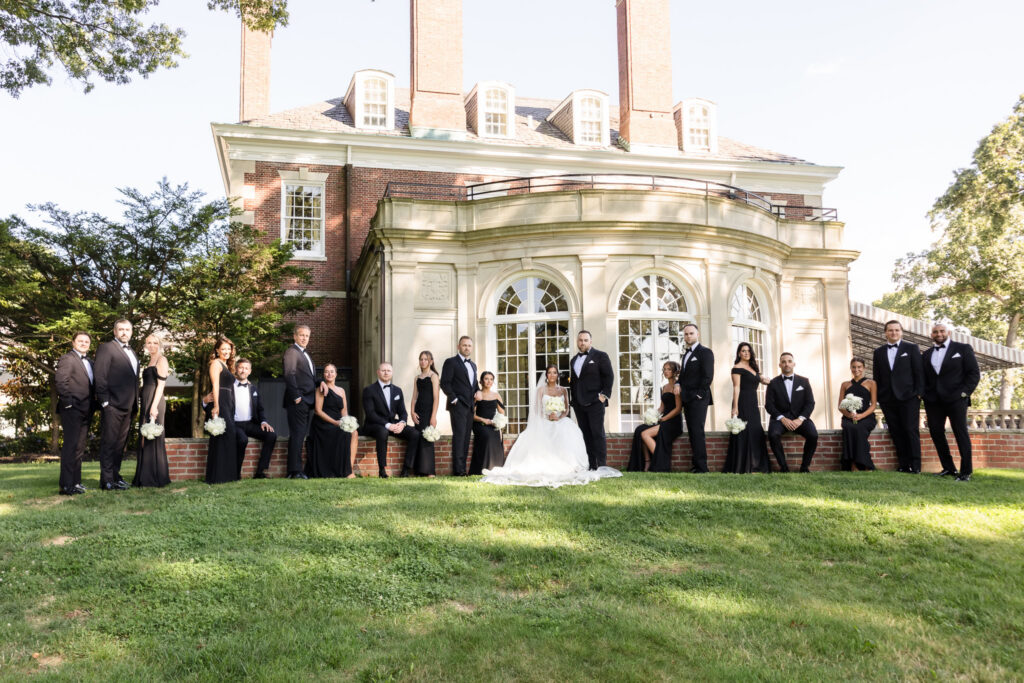
Then we took our time. Portraits of the two of them first, unhurried, because nothing was waiting. Then the wedding party. Then family.
That order is deliberate, and we build it with every couple in advance. Our wedding day family photo shot list explains how the family groupings get planned, which is the part of a timeline that most often falls apart.
Christine and Matt had also been photographed together before, at their Centerport Yacht Club engagement session. That session gave us time to learn how they interact in front of a camera and how much direction feels natural to them. By the wedding, we were not starting that relationship from scratch.
A Break Before the Ceremony
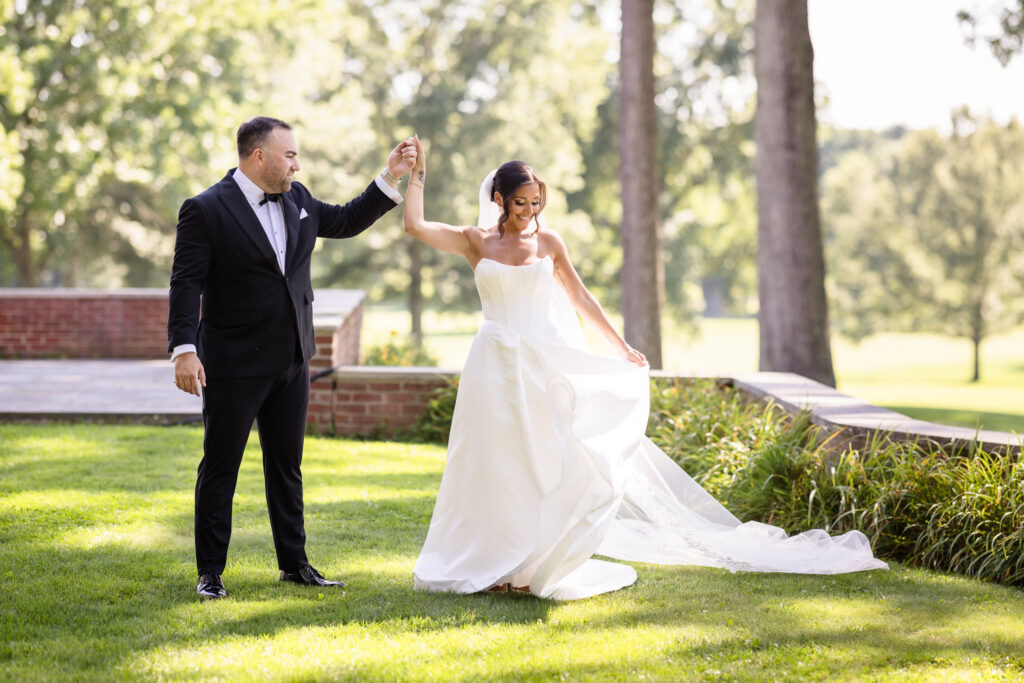
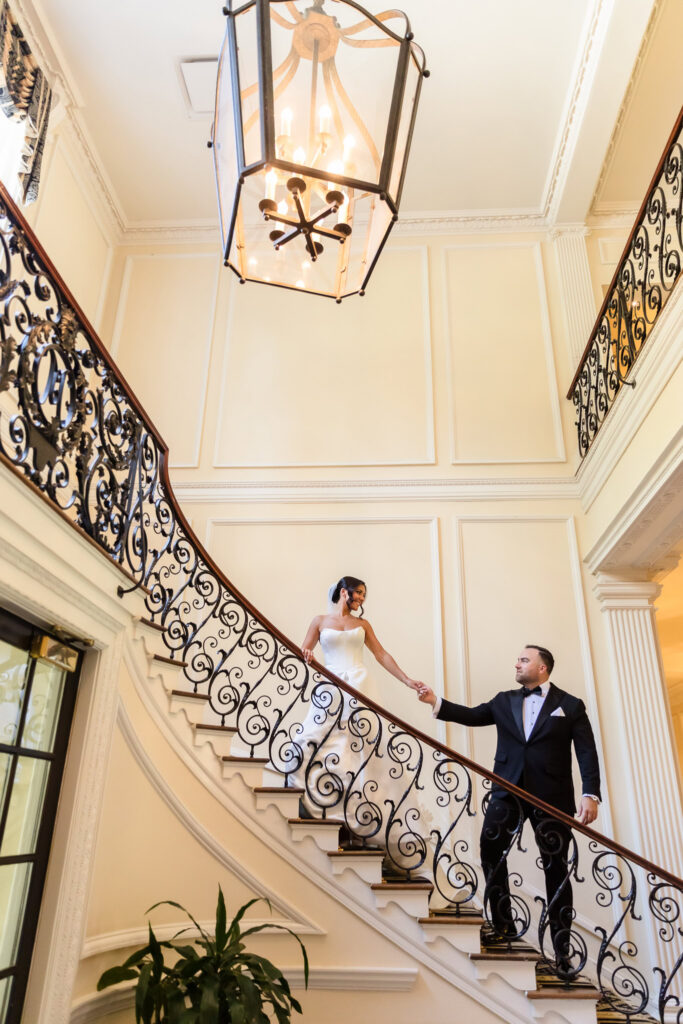
Then something happened that is surprisingly rare on a wedding day. They had a break.
Portraits were finished, the ceremony had not started, and there was actual time. Christine and Matt went and prepared for the ceremony instead of being pulled directly from one thing into the next.
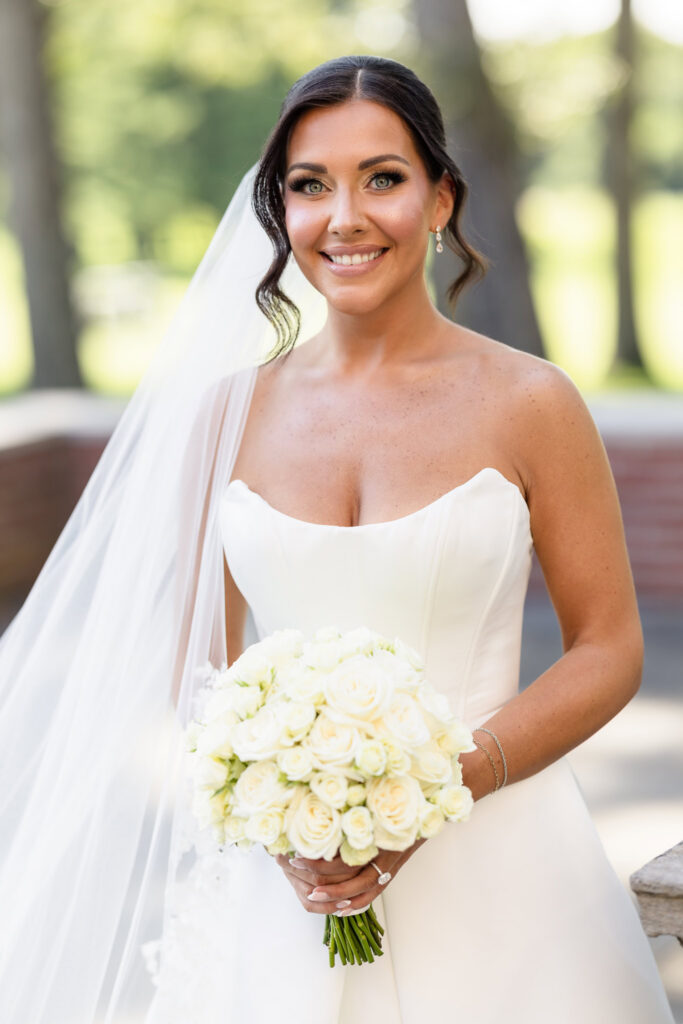
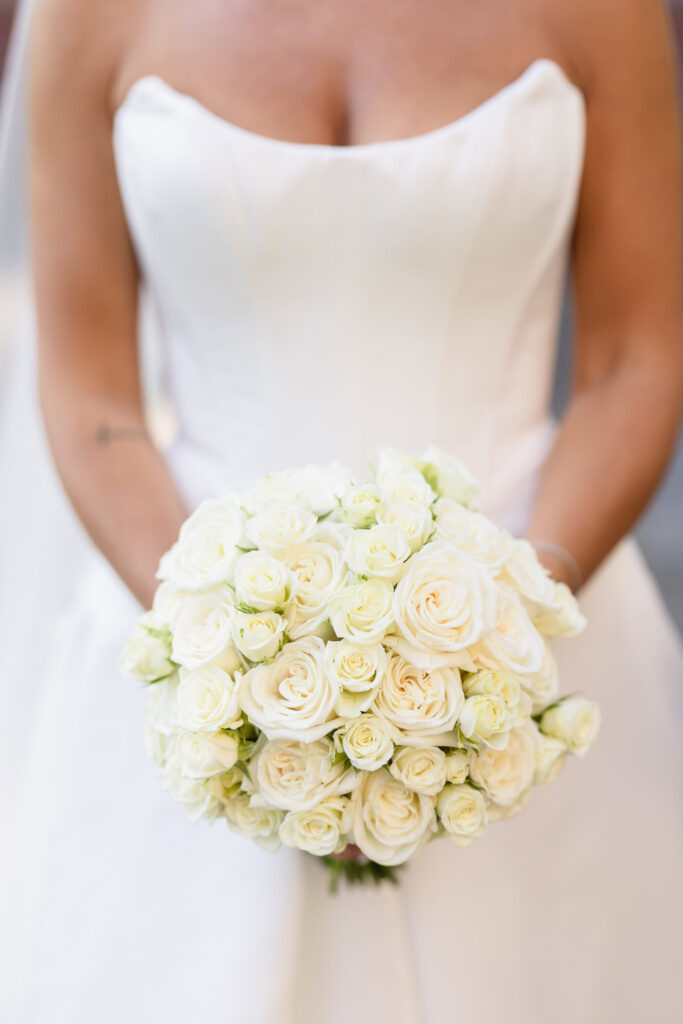
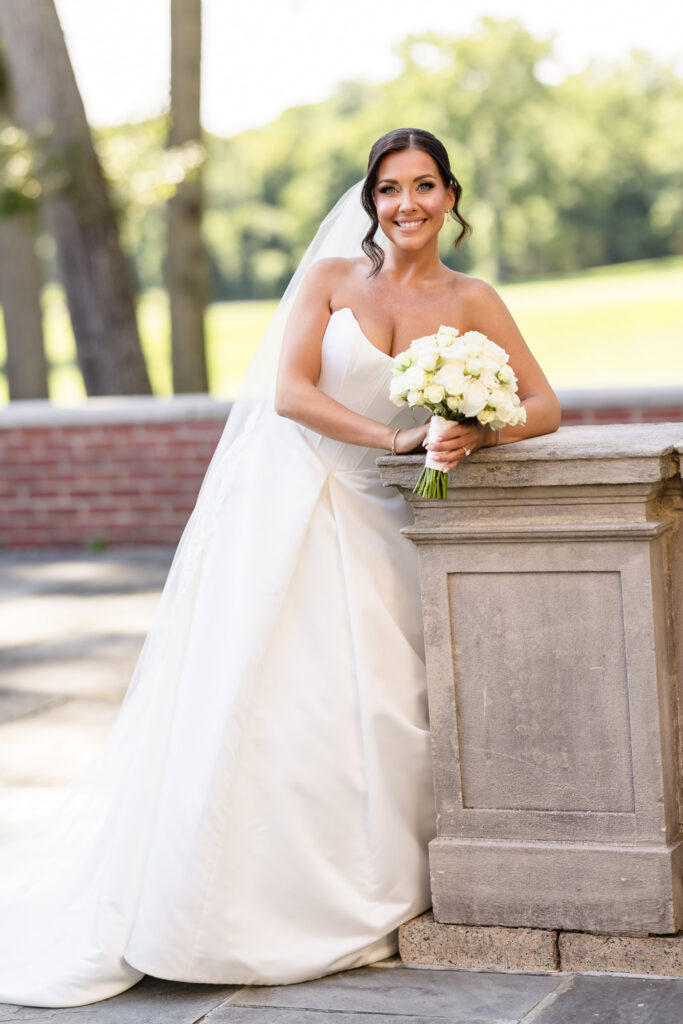
This is what people mean when they say a wedding felt unhurried. It is not a mood. The timeline has air in it, and air in a timeline is something you have to plan months ahead. It does not appear on its own.
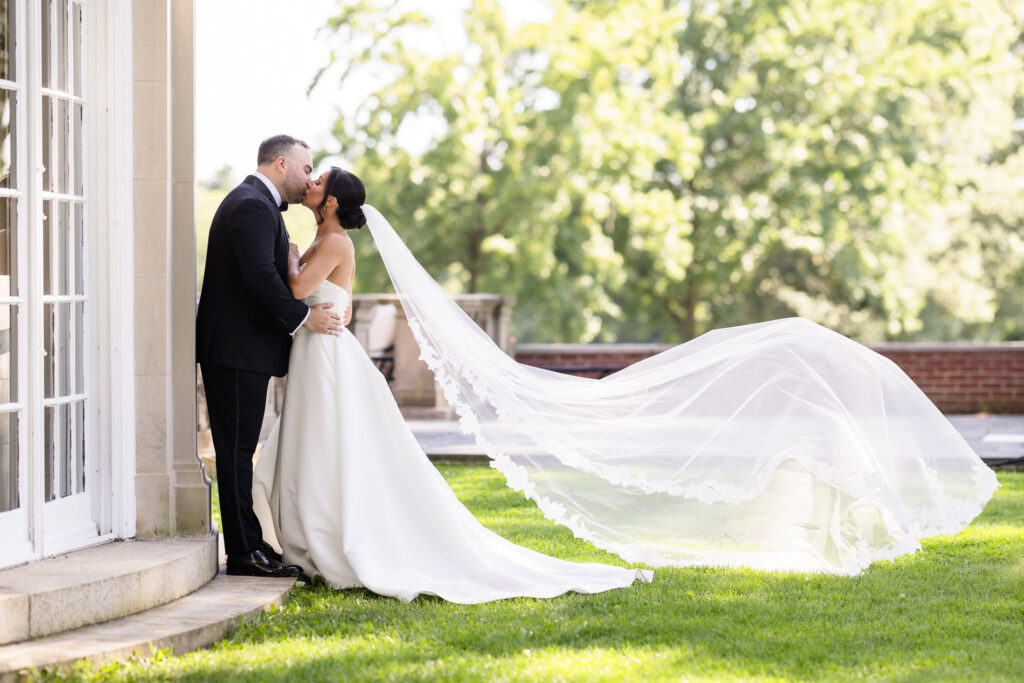
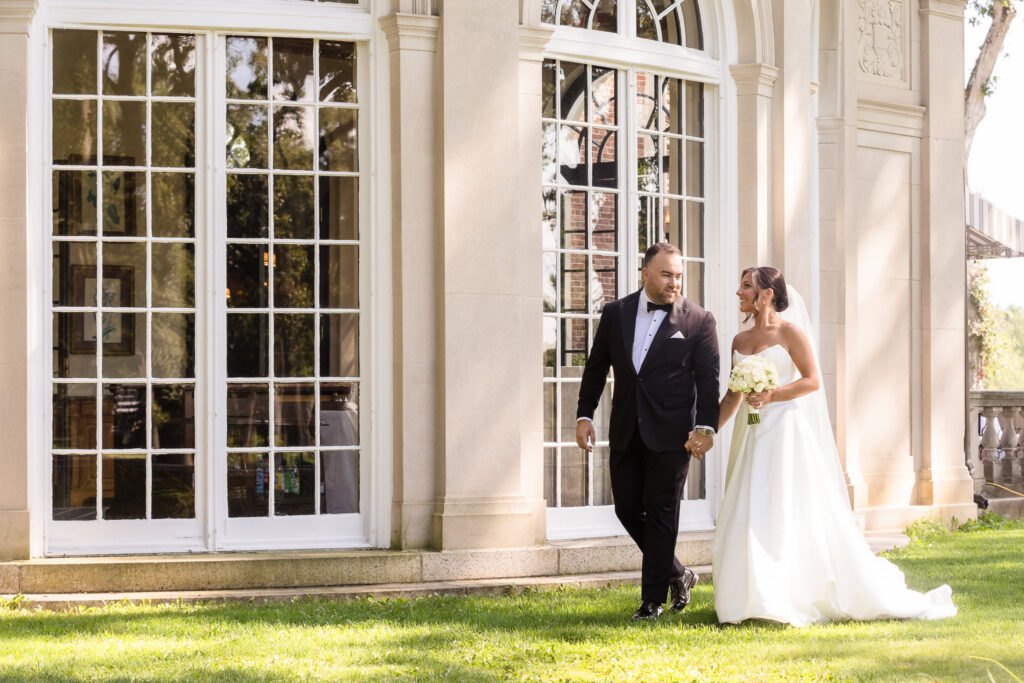
The Ceremony
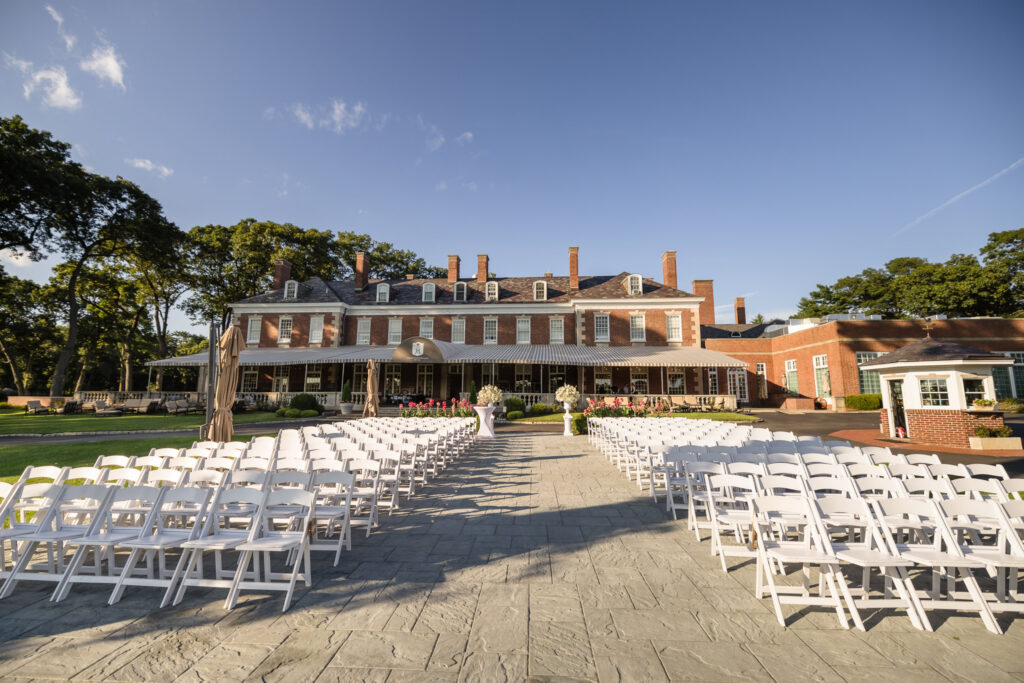
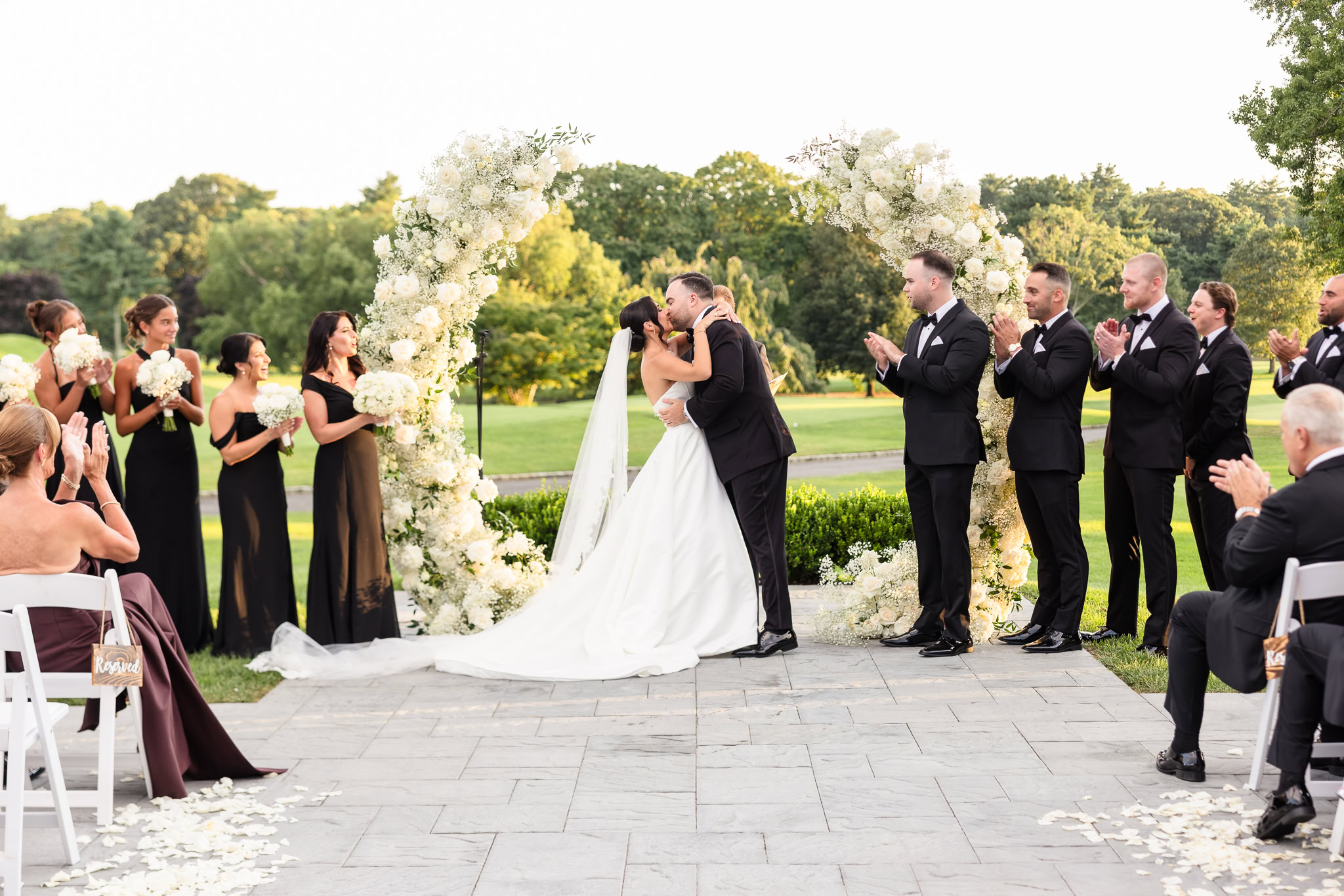
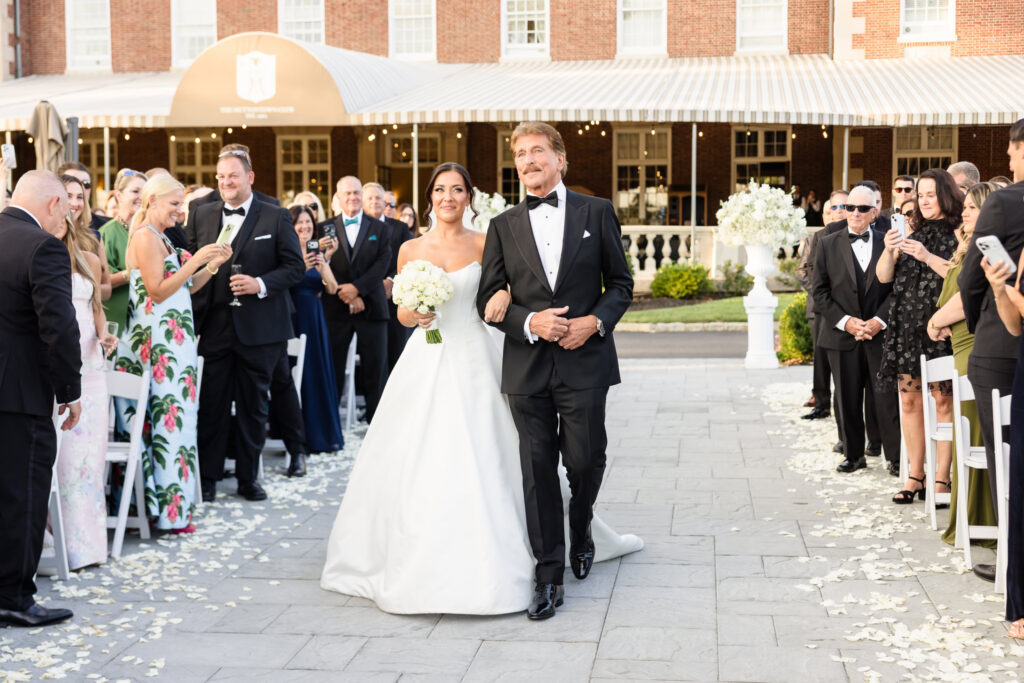
The ceremony was on the lawn, and the florals were by Pedestals. They were the best decor decision of the day.
A lawn ceremony has no architecture to lean on. Whatever you bring is what the ceremony looks like in the photographs, which is why this particular investment paid so well.
The timing helped too. Their ceremony was in the late afternoon, with the sun low and coming slightly from the side. That is the light you want and it cannot be bought late. At Muttontown the aisle runs from the building out toward the golf course, so the direction is fixed and the ceremony time is the only variable. Theirs was set well.
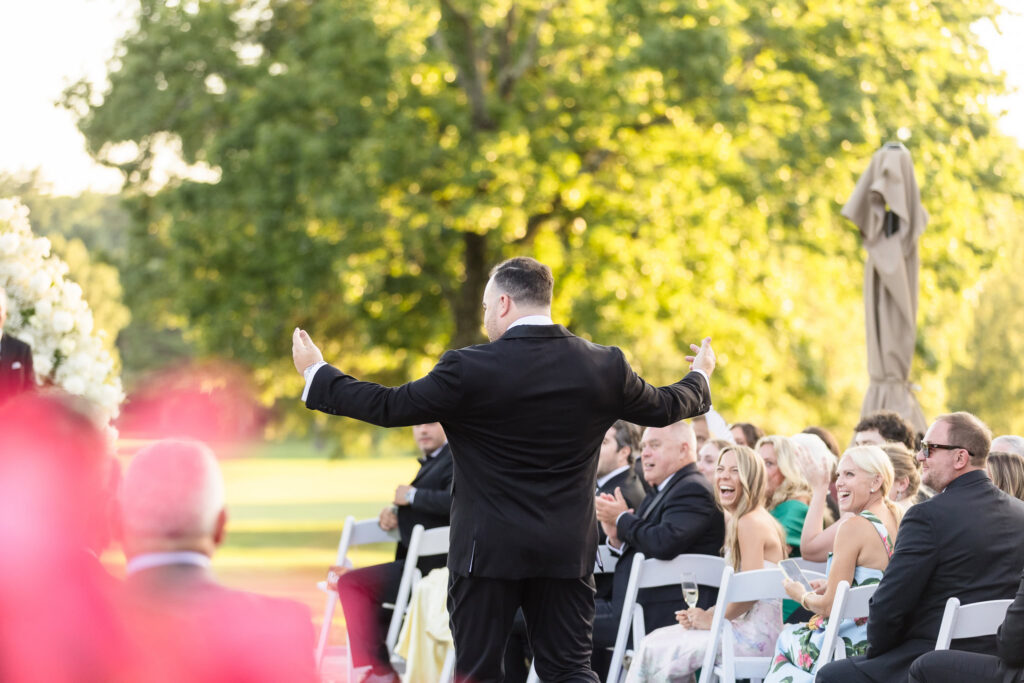
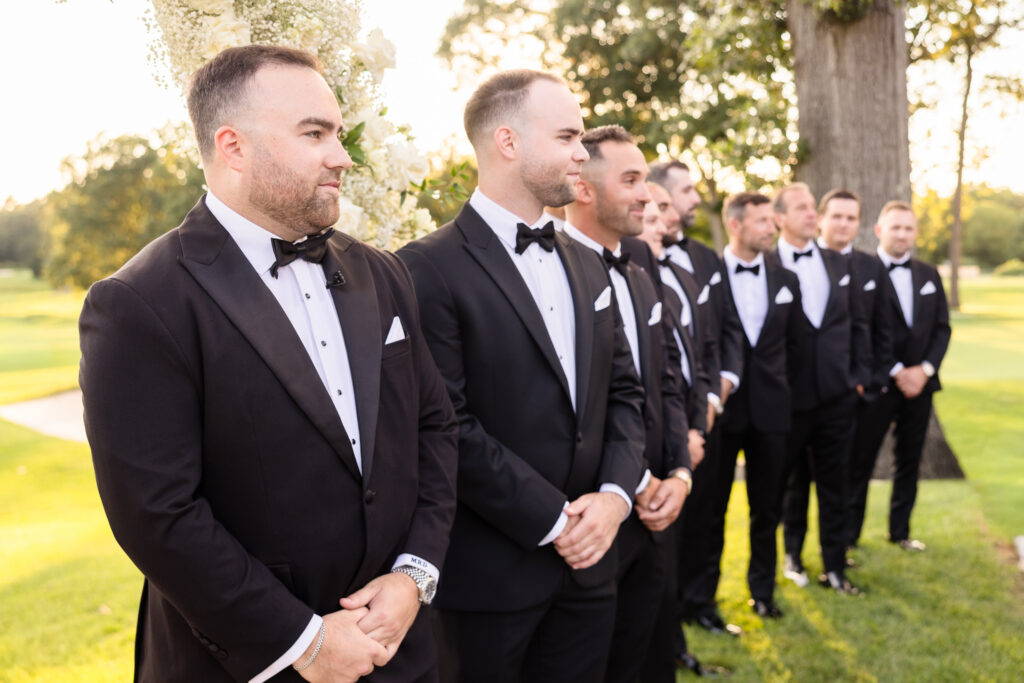
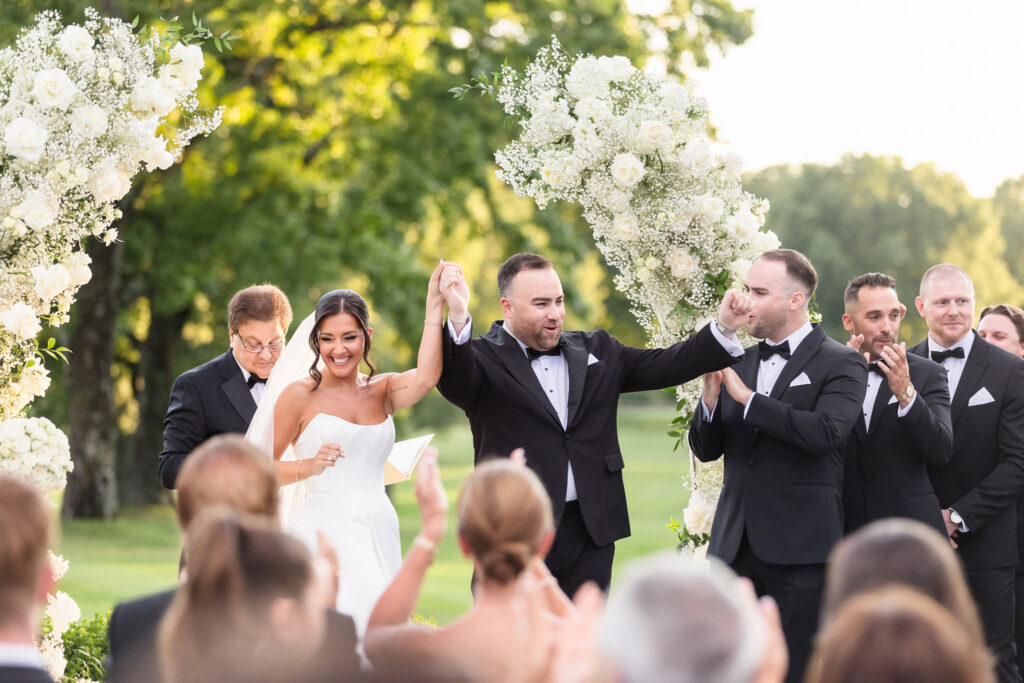
Christine’s uncle officiated. There is a difference between a ceremony delivered by someone reading a script and a ceremony delivered by someone who has known you your whole life, and every person in those chairs could feel it.
Having married at the church the day before did not make Saturday’s ceremony smaller. If anything it made it larger, because nothing about it was administrative. It was the meaningful part, delivered by family, in front of everyone who had come to see it.
And every one of those people was already there. They had not just arrived from somewhere else.
Cocktail Hour Outside
The weather was perfect, so cocktail hour went outside.
Christine and Matt made their entrance on a golf cart, which was as good as it sounds and produced exactly the reaction they were hoping for.
More importantly, they were at their own cocktail hour. All of it. Portraits were finished, the ceremony was behind them, and nothing left on the schedule required them. They spent the hour with their guests, which is what the hour is for and what most couples miss entirely.
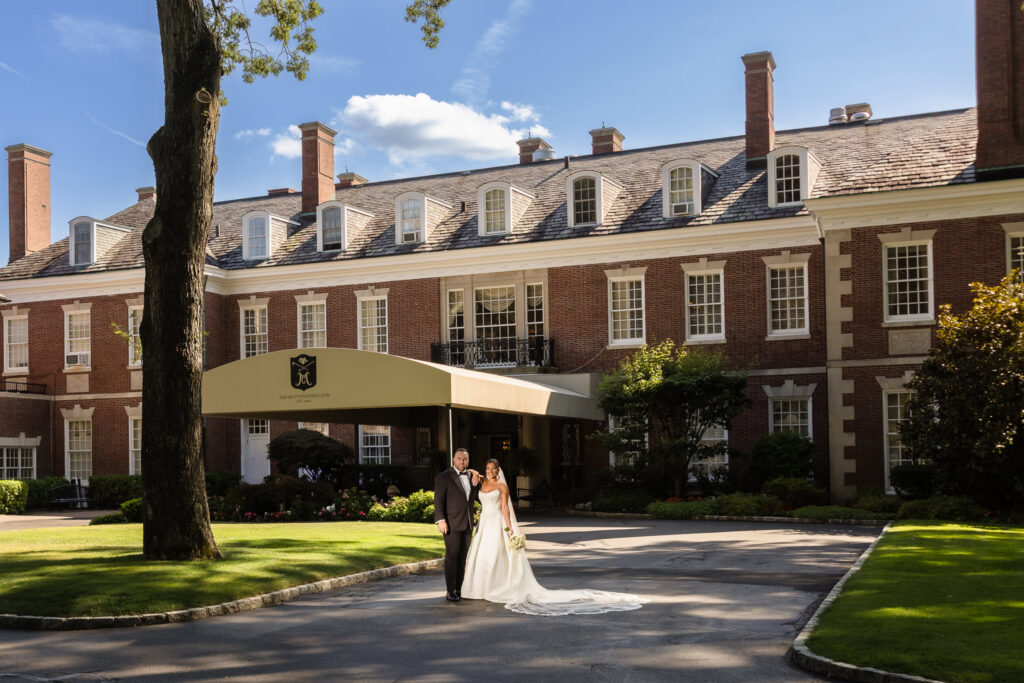
The Reception
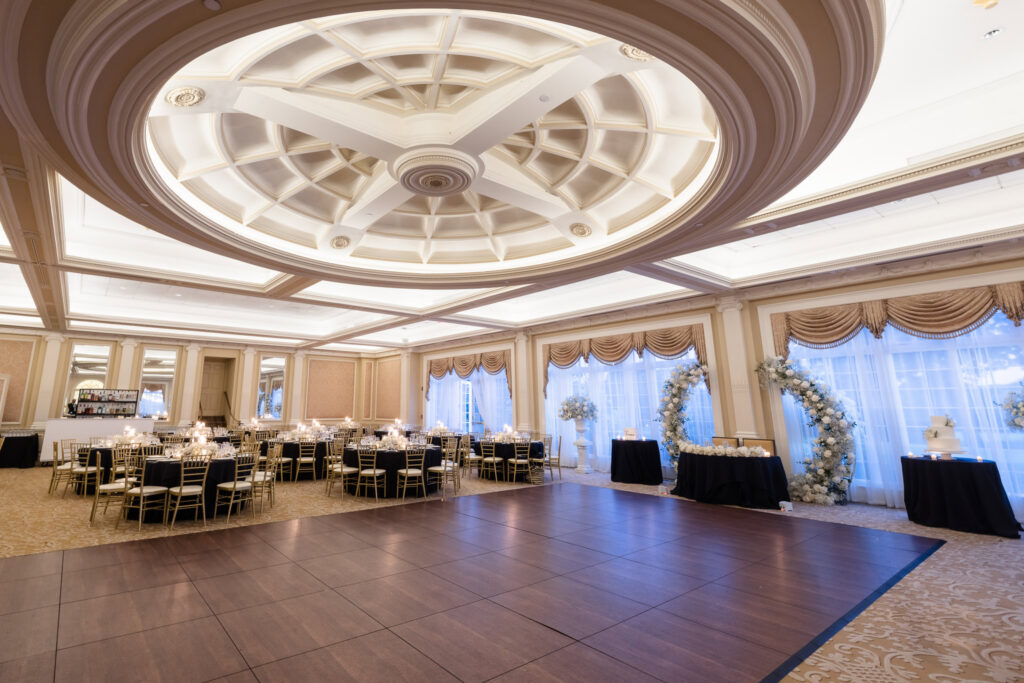
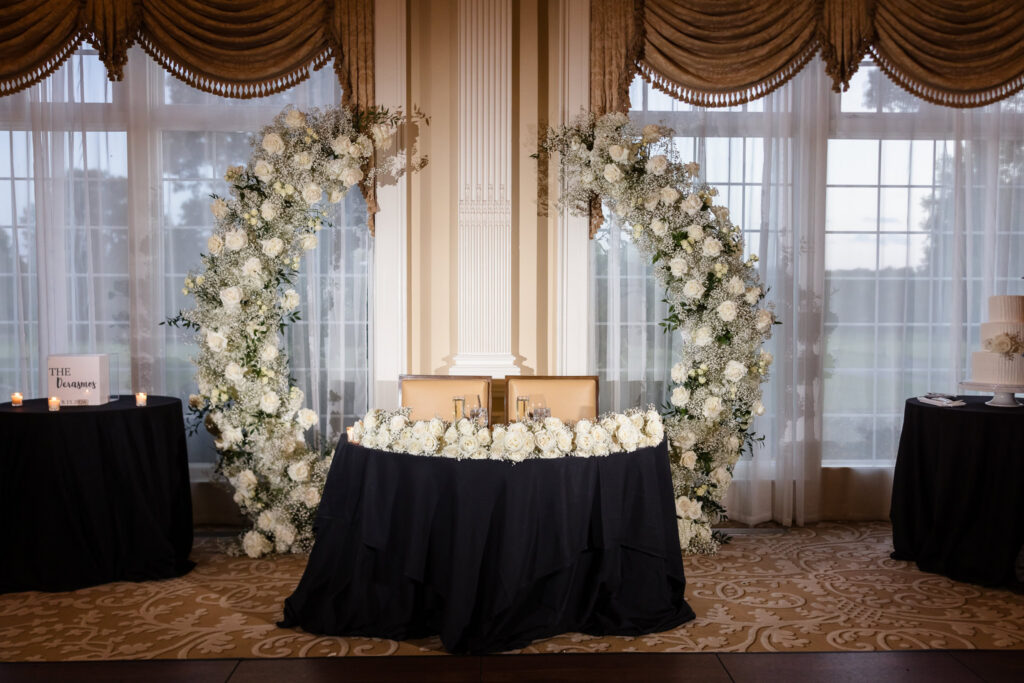
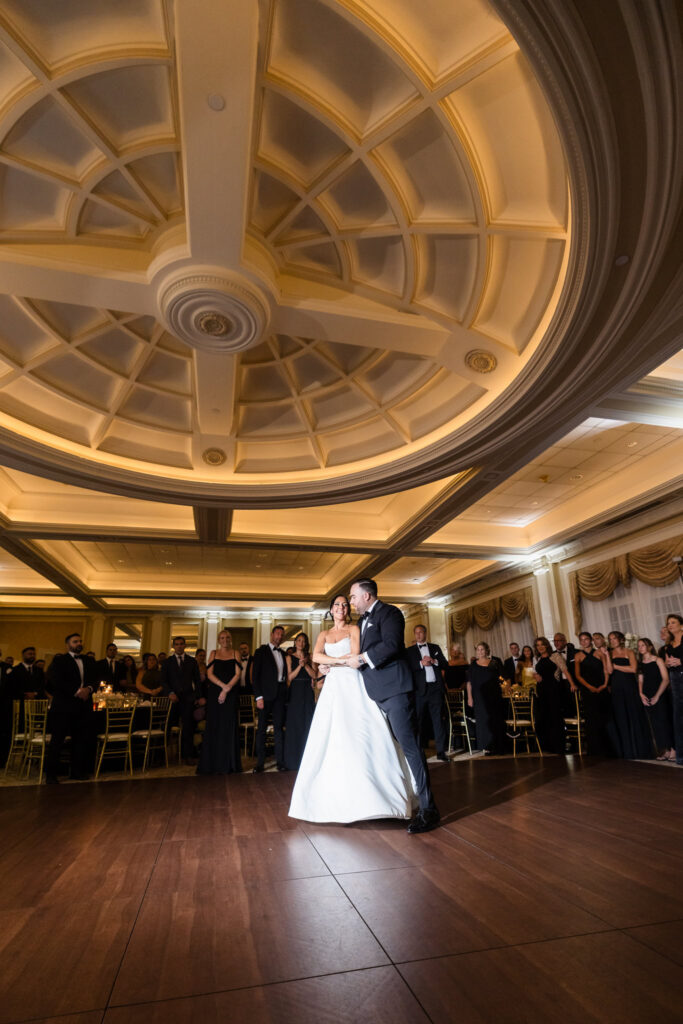
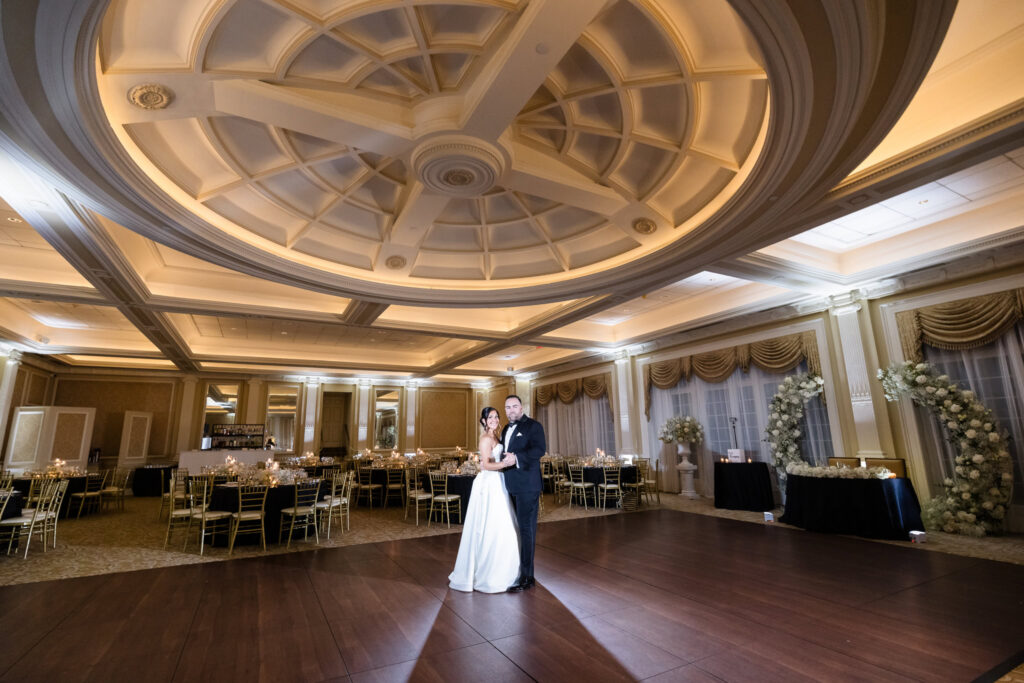
The room was set beautifully, and the guests were fully in it.
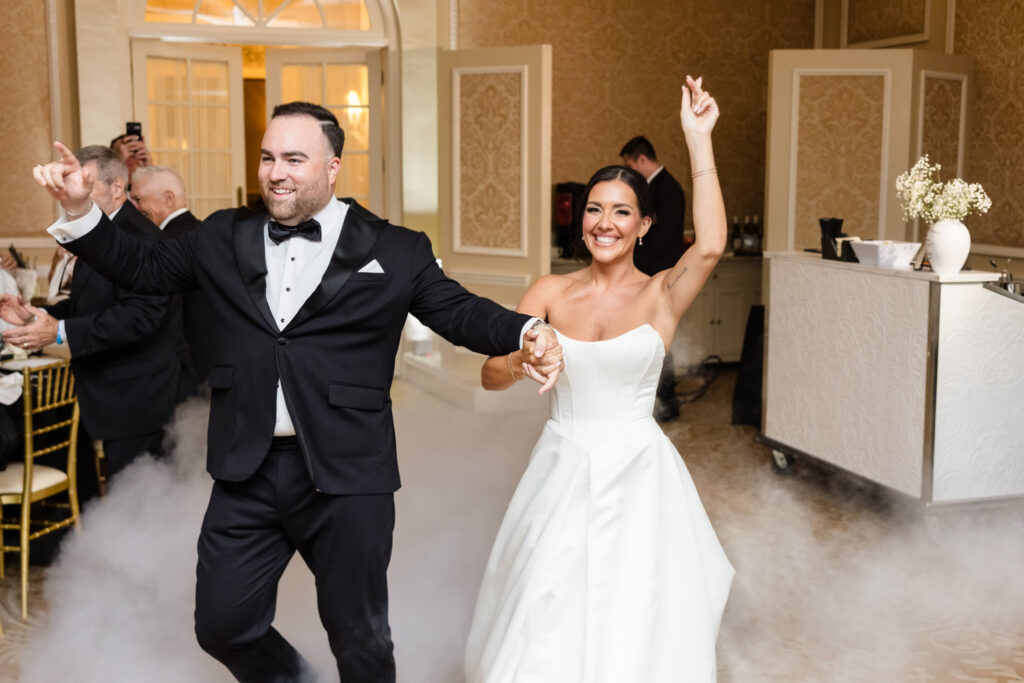
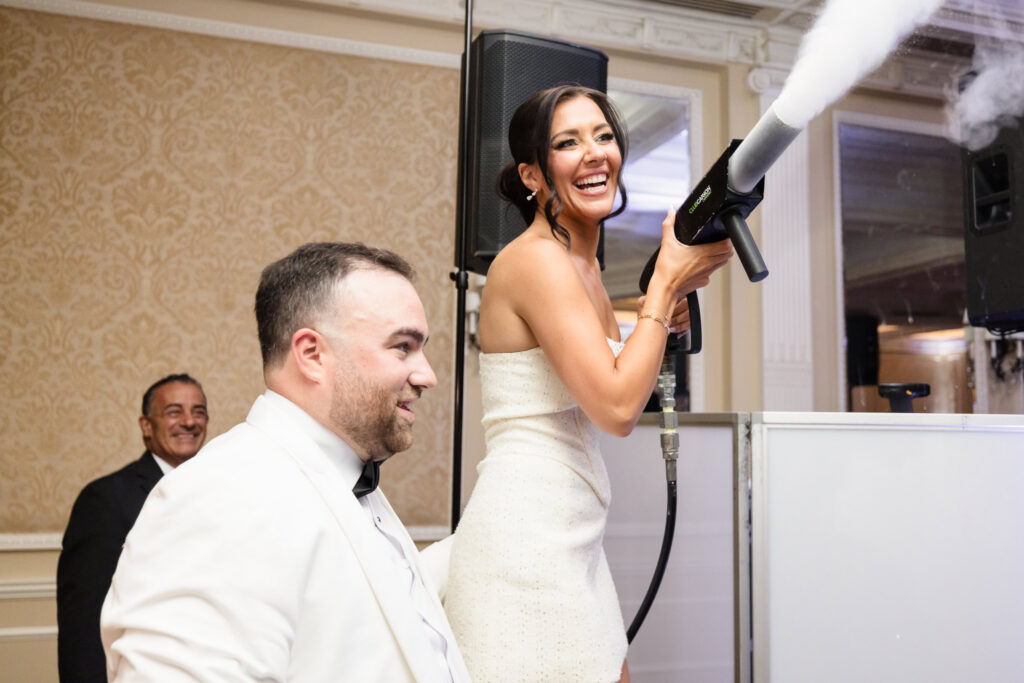
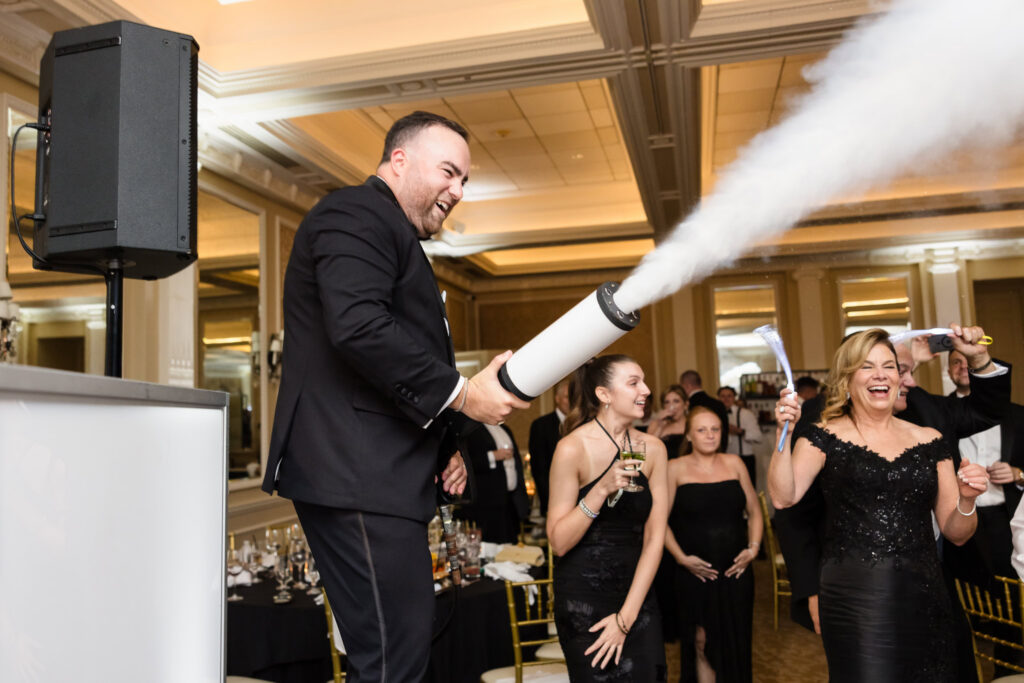
Partway through the reception, Christine and Matt jumped on stage and set off CO2 cannons. Loud, unannounced, completely committed. That moment is the whole wedding in one image. Nobody does that on a day they are enduring.
What Made This Wedding Work
Every part of Christine and Matt’s day was intentional, and the two-day structure was the largest intention of all.
Look at what each decision removed. Holding the ceremony on Friday meant Saturday had one address instead of two. Getting ready on site meant the couple never left it. A first look meant portraits were finished before guests arrived. A break before the ceremony meant nobody sprinted into the most meaningful part of the day. An officiant who was family meant the ceremony belonged to them rather than to a template.
None of those choices is dramatic on its own. Together they gave everyone, the couple and their families and every guest in the room, one place to be and no reason to leave it.
That is worth saying plainly, because “intentional” gets used loosely. Here it meant a series of specific decisions, made early, that each removed a way the day could have gone sideways. The dividend was paid in presence.
A two-day wedding is not the only way to get this, and it will not make sense for every couple. It costs more, and it asks two days of your guests, so it works best when most of them are local or traveling in and staying anyway. If your ceremony and reception are already happening in the same place, you have the same advantage sitting there available to you. The question is whether your timeline is built to use it.
What we would carry into any wedding, across two days or one: protect the couple’s time first, then build the photography around it. Christine and Matt’s wedding was also featured by Sophisticated Weddings, one of several publications where our published work has appeared.
Frequently Asked Questions
Can you have your wedding ceremony and reception on different days?
Yes. A couple can hold a religious ceremony on one day and the larger celebration on another. Christine and Matt married in a church on Friday, then held a second ceremony and their celebration at The Muttontown Club on Saturday.
What are the advantages of a two-day wedding?
The celebration day happens at a single address. Guests arrive once, stay for all of it, and go home from there, instead of being asked to find two locations in one afternoon. For the couple, it means the portrait window is not whatever traffic leaves behind, and there is no point in the day where they are managing a relocation instead of attending their own wedding.
What is the downside of a two-day wedding?
Cost and logistics. You are asking guests to commit two days, and you may need two rounds of hair and makeup, additional photography coverage, and transportation on both days. It works best when the guest list is largely local, or when most guests are traveling in and staying anyway. Our guide to what a Long Island wedding costs breaks down which expenses actually move with a decision like this one and which do not.
How much time do you actually lose traveling from a church to a reception venue?
Considerably more than the drive. A twenty minute trip is rarely twenty minutes of the wedding day once you account for gathering everyone, loading transportation, the drive itself, unloading, and getting people back into position at the far end. When we build a timeline we treat that whole sequence as one block rather than as a drive, and that block usually costs closer to an hour. It comes out of portraits, because cocktail hour cannot move.
Should you still do a first look if you had your ceremony the day before?
You can, and it can still be worth it. Christine and Matt did one at The Muttontown Club near the golf course, and it served the same purpose it always does. It moved couples portraits, wedding party portraits, and family portraits ahead of the ceremony, which is what left them free during cocktail hour.
Can a family member lead your wedding ceremony?
A family member can lead a ceremony, and it changes the room. Christine’s uncle led theirs at The Muttontown Club, and the difference between someone reading a script and someone who has known you your whole life was audible.
Whether that person can also perform the legal marriage is a separate question, with rules that vary by state and sometimes by county. Confirm it with the clerk’s office where you are marrying. Many couples handle the legal side with an officiant who is clearly authorized, and leave the ceremony that matters to someone they love.
About the Photographer
Stephen Mayo is the founder and lead photographer of Heritage House Photography, a boutique wedding photography studio serving Long Island, New York City, Westchester, New Jersey, and select destinations.
Heritage House approaches wedding photography as part of the larger wedding day experience. Timelines, first looks, family portrait lists, travel between locations, and portrait timing all get planned well before the wedding, so couples spend more of the day with the people they invited to share it.
That planning shaped the coverage of both days of Christine and Matt’s wedding. You can see more of our work in the Long Island wedding portfolio.
Planning a Two-Day Wedding on Long Island?
A two-day wedding takes more planning, not less. The coverage has to be structured across both days, the timeline has to be built twice, and the decisions that give your guests one place to be have to be made months ahead.
That planning is the work, and it is our job rather than yours.
If you are considering a two-day wedding, or planning a wedding at The Muttontown Club, we would like to hear about it. Contact Heritage House to start the conversation.
Vendors
Photographer: Heritage House Photography
Venue: The Muttontown Club
Videographer: Effervescent Films
Florist: Pedestals Floral Decorators
Dress Designer: Paloma Blanca
Bridal Boutique: Bridal Salon of Huntington Village
Hair: Bridal by Nicole Antos
Makeup: Makeup by Marisa
Veil and Hair Piece: Marionat Bridal
Entertainment and Lighting Design: Barattini Productions
Transportation: Sir Oliver Limousine
Invitations: Medici Fine Stationery
Groom and Groomsmen Attire: Men’s Wearhouse
Jeweler: Nuha Jewelers
Signage: MJ Event Signage
Explore more of the journal

Inquire
Share a few details to get started
We take on a limited number of weddings each year to provide a refined, high-touch experience for every couple.
After you inquire, we’ll follow up right away with more information and next steps. From there, you can choose a time that works best and we’ll connect to talk through your plans.
Stephen@heritagehousephoto.com

Submit
By submitting this form, you agree to receive SMS messages from Heritage House regarding your inquiry. Message and data rates may apply.
By clicking "submit" you acknowledge you have read and agreed to our terms & conditions & privacy policy


READ AND Leave Us A Comment